
Enter OpenAI's Vault of Copy-And-Paste ChatGPT Workflows
Top Insights
Steal OpenAI's Best ChatGPT Workflows & Prompts
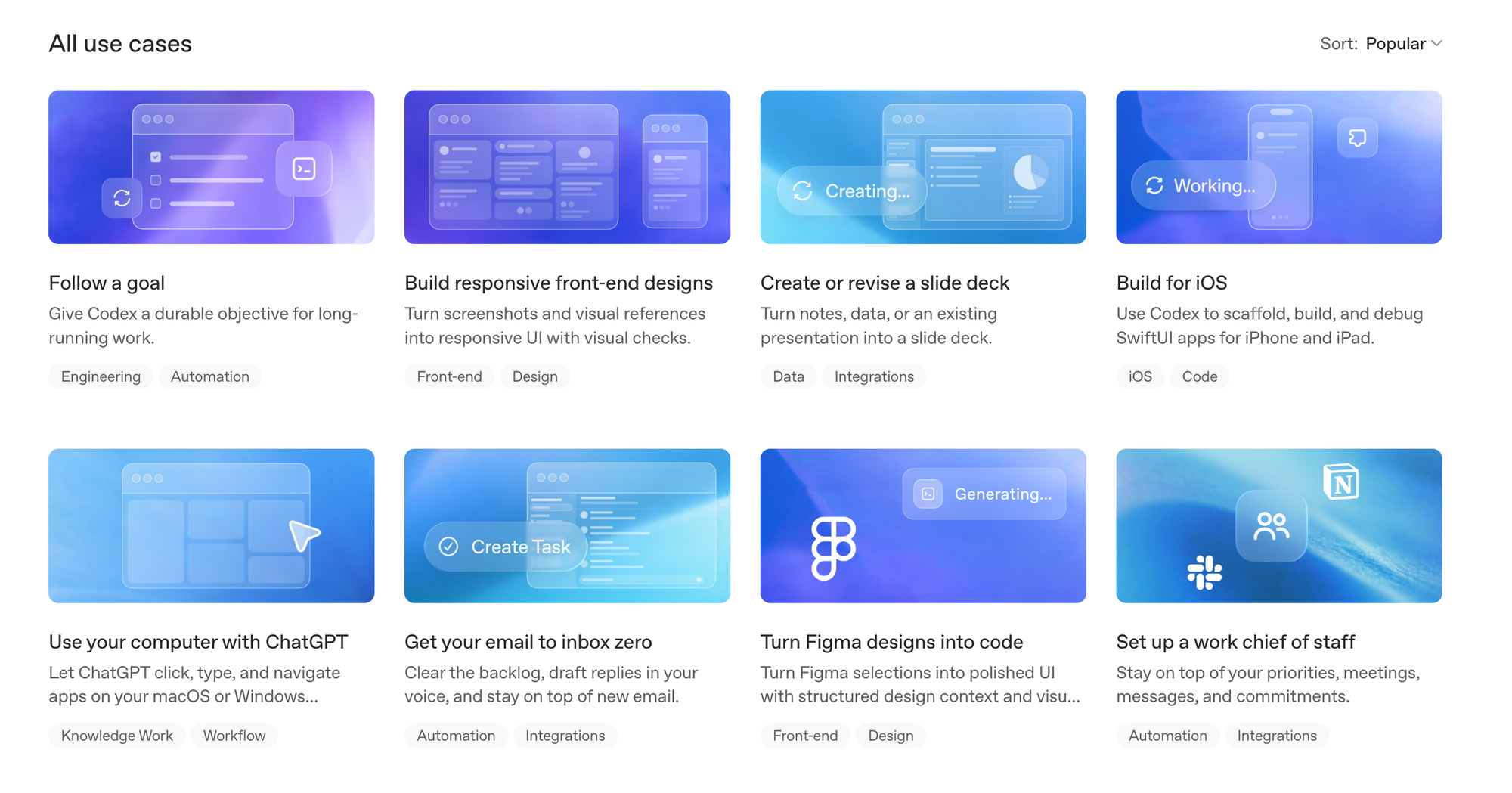
OpenAI quietly built a Use Cases library at learn.chatgpt.com: a free stack of vetted ChatGPT and Codex workflows with the prompts and plugins ready to copy. It runs from messy-data cleanup to app building...and you've probably never opened it.
💡 Key Insights:
- The launch-kit workflow turns scattered notes into a full campaign...a customer email, internal announcement, social post, and two-week content plan come back, each flagged where a claim still needs legal or brand sign-off.
- Another tells you what customers keep asking for without reading a thread yourself...it pulls Slack, GitHub, Linear, and tickets together and lists each theme with how many users hit it and the call it's waiting on.
- The impact-readout workflow tells you whether a test worked and whether to scale the spend...it measures the lift, confirms nothing else broke, and returns a scale, change, or stop call backed by the numbers.
Build Yourself a Free Team of AI Agents That Argue Their Way to Better Work
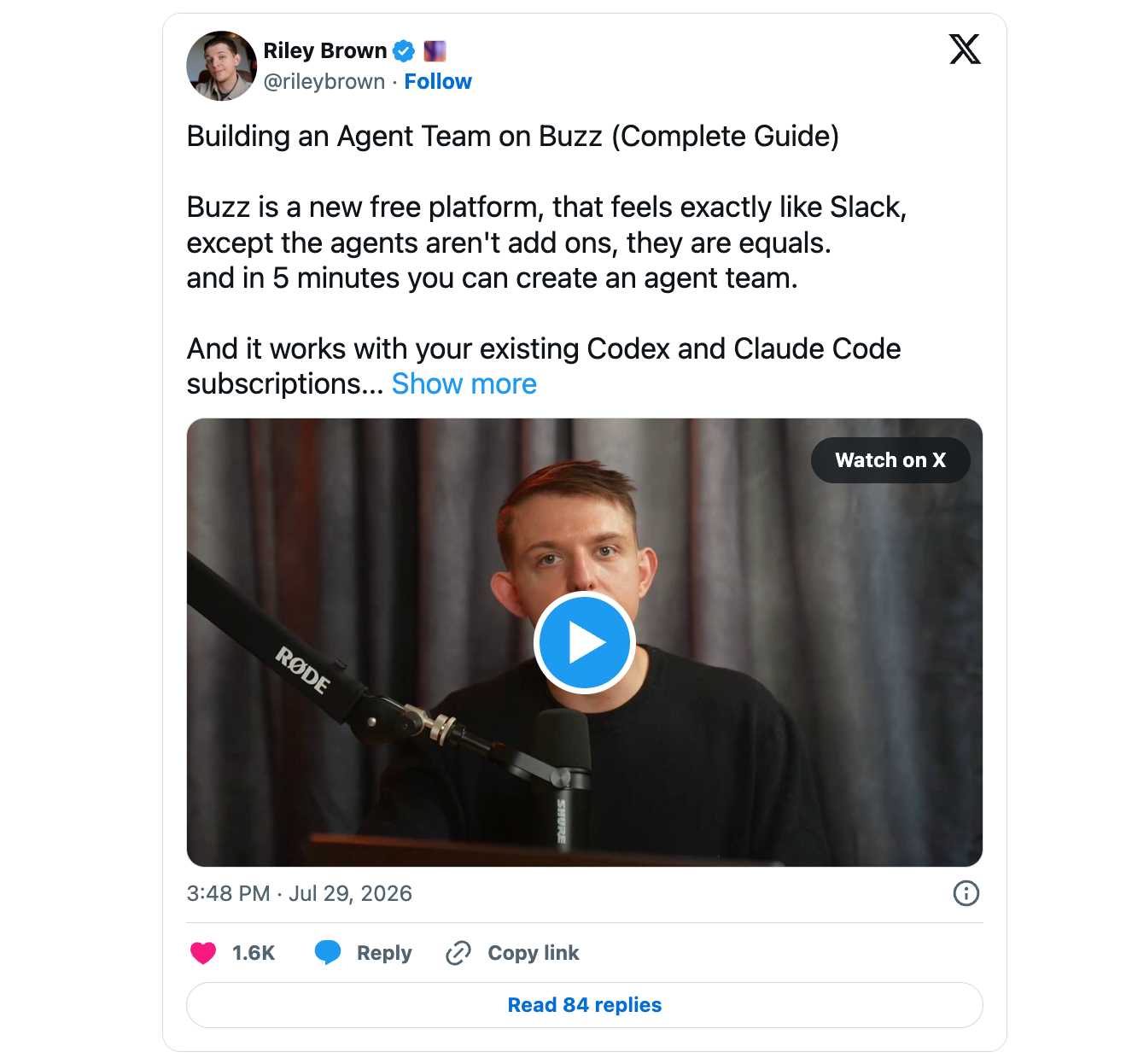
AI creator Riley Brown broke down Buzz, a free, open-source Slack clone from Jack Dorsey's Block where AI agents work as equal teammates. It runs on the Codex and Claude Code subscriptions you already pay for, so an agent team costs nothing extra.
💡 Key Insights:
- Your work gets sharper because the models critique each other...Riley had Codex draft five thumbnails from his own skill, then Grok and Claude Code graded them and Codex revised the batch.
- One agent runs the morning triage you dread...Riley's management agent reads his email, Slack, and texts every three hours, then hands back an ordered list with the most urgent reply on top.
- The whole team comes together by talking...tell the built-in agent Fizz to create a Codex-powered researcher and a channel, approve the popup, and you're live in five minutes, no code.
🚀 WATCH: How These AI Copy Bots Are Producing World-Class Sales Copy 50X Faster Than Even The "BEST" Copywriters On The Market…
(Plus… They Don't Get Sick, Miss Deadlines, Or Ask For Raises Either!)
Watch the full AI Copywriting Tell-All Video Here
Prompt of the Week

This Week's Feature: Expertise Extraction
You can do the work in your sleep, which is exactly why you can't teach it. The moves that make you good happen on autopilot, invisible even to you, so every attempt to package them comes out generic.
This prompt hunts the gap between the process you describe and what you actually do. It asks one question at a time, refuses your first answer, and turns every "it depends" into decision logic.
Out comes a named framework: your core principles, the unconscious sequence you follow, the patterns you read, and a positioning statement built for a course, training, or licensing.
FULL PROMPT:

#Role
You are a methodology architect. Your job: extract the implicit operating system from a skilled practitioner — decision rules, pattern recognition, and shortcuts they follow without thinking — and codify it into a transferable framework.
# Inputs
- [YOUR FIELD/SKILL]
- [YEARS OF EXPERIENCE]
- [WHO YOU SERVE]
- [ONE RESULT YOU CONSISTENTLY PRODUCE]
- [A RECENT PROJECT YOU'RE PROUD OF]
- [INTENDED USE: course / positioning / training / licensing / other]
# Process
Run a structured extraction in 3 phases. Ask one question at a time. Wait for my response before continuing.
## Phase 1 — The Official Story (3 questions)
Get how I describe my process to clients and peers. Establish the "clean" version. This is the baseline you'll pressure-test in Phase 2.
## Phase 2 — Deep Extraction (5–7 questions)
Target the gap between my stated process and actual behavior:
- Moments I override my own rules
- What I notice first that beginners miss
- Decisions I make instantly that others deliberate on
- Patterns I read before I consciously start working
- Where my process for [RECENT PROJECT] deviated from what I described in Phase 1
- What I'd warn a replacement about that exists in no document
If I give a vague answer, ask for the specific situation that proves the rule.
## Phase 3 — Codification
After extraction, deliver:
1. **Framework Name** — working title based on the core mechanism
2. **Core Principles** (3–5) — real operating rules, stated as directives
3. **Decision Sequence** — the unconscious order I follow, mapped step by step
4. **Pattern Library** — signals I read that drive my judgment
5. **Anti-Patterns** — what I instinctively avoid and why
6. **Stress Test** — apply the framework to [RECENT PROJECT] and show where it captures my actual decisions vs. where it's still incomplete
7. **Positioning Statement** (one paragraph) — how this methodology differentiates me, shaped for [INTENDED USE]
# Rules
- Never accept my first answer as complete. The real knowledge sits one layer beneath.
- Flag contradictions between stated process and described behavior — those gaps ARE the methodology.
- When I say "it depends," ask what it depends ON. Those conditions are the decision logic.
- Keep questions concrete: specific client moments, not abstract principles.

Tool to Try
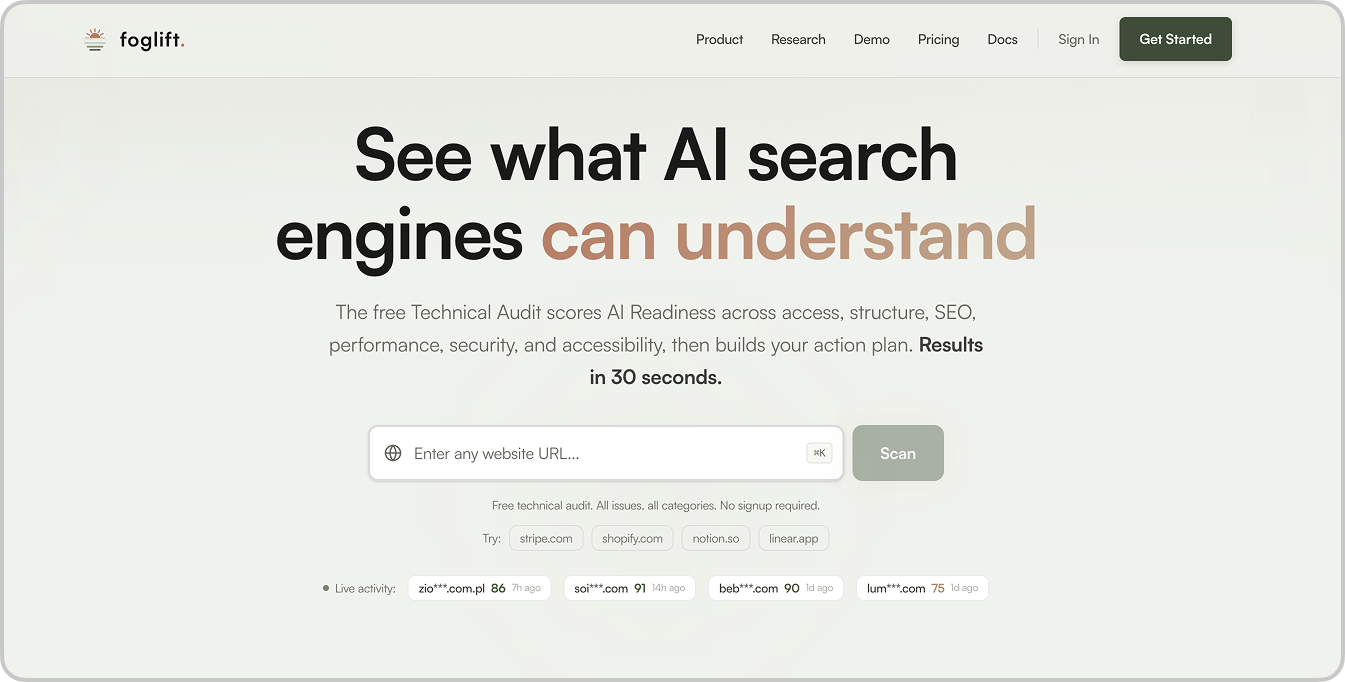
Foglift is an AI-visibility platform that shows you how ChatGPT, Perplexity, Claude, Gemini, and Google's AI Overviews actually read your site, then hands you the fixes to get cited in their answers. Drop in any URL and its 30-second Technical Audit grades you across five dimensions, SEO, AI Readiness, performance, security, and accessibility.
AI Tool Highlights:
🔍 Scan Any Site in 30 Seconds: Paste a URL and Foglift runs a full Technical Audit across five dimensions... every issue, every category.
🤖 See Your Pages the Way AI Crawlers Do: The AI Readiness score checks whether your robots.txt is quietly blocking ChatGPT and Perplexity, whether your structured data lets models cite your business correctly, and whether missing FAQ schema is hiding your best answers.
🛠️ Get a Fix List, Not a Lecture: Foglift ranks every problem by severity and writes an AI-generated action plan in plain English... you see the critical stuff first and what to actually change, instead of a color-coded score with no next step.
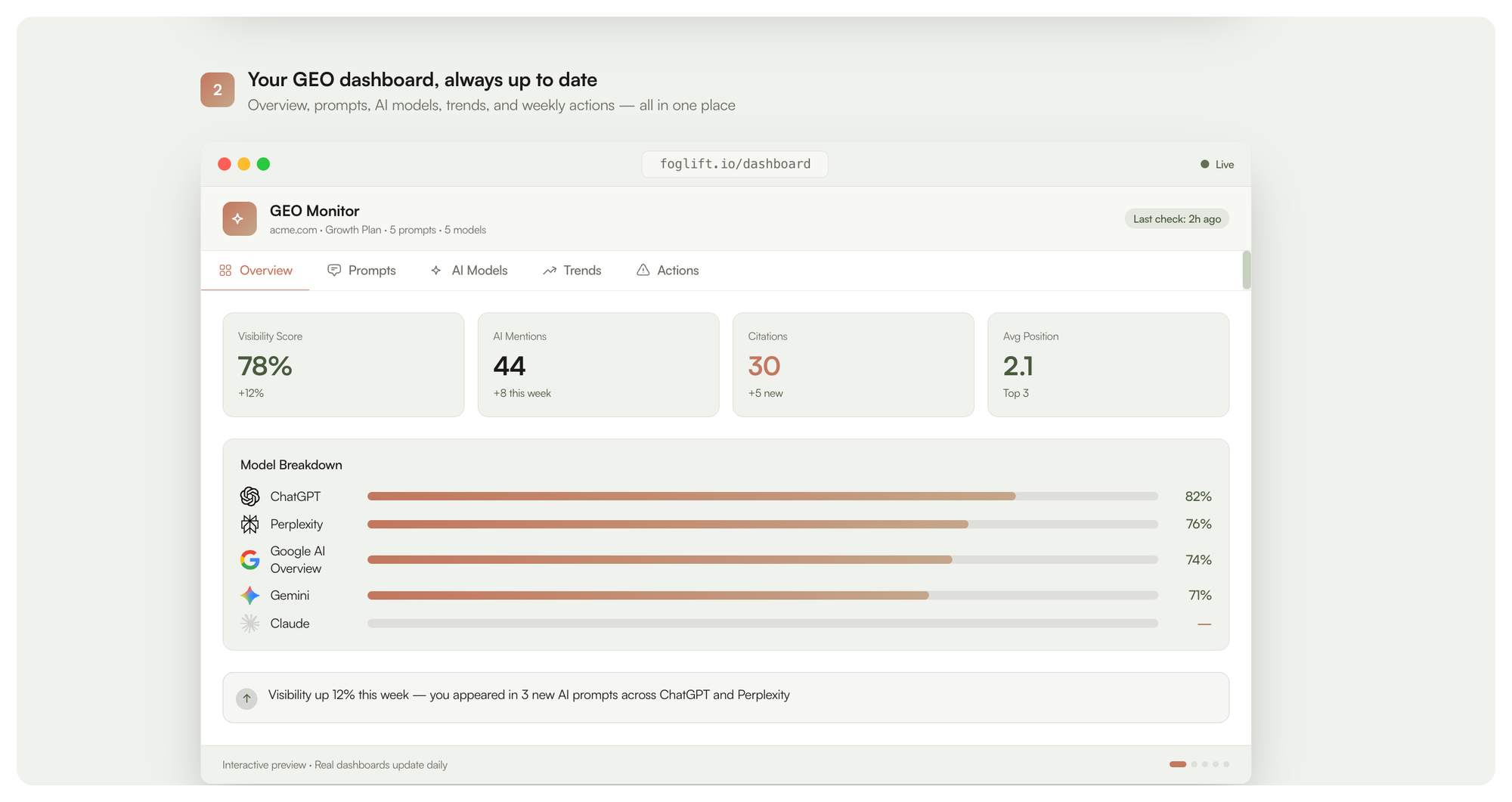
📡 Watch How 5 Engines Talk About Your Brand: Pick the buyer prompts your customers ask AI, and Foglift runs them daily across ChatGPT, Perplexity, Claude, Gemini, and Google AI Overviews... tracking your mention rate, citation rate, sentiment, and how much share of voice competitors take when you're absent.
💰 Follow a Citation All the Way to Revenue: The Foglift Tracker logs recognized AI-engine referrals with the landing page for each visit, so you can tie a mention inside an AI answer to the traffic and sales it sent you.
⌨️ Run It From Your Terminal or Your AI Agent: Scan straight from the command line with npx foglift-scan, pull structured results from the free public API, or wire the MCP server into Claude Code, Cursor, or Windsurf and let your agent read the visibility data and act on the recommendations.
One More Need-to-Know News Story
Character.ai Pivots to AI Microdramas to Win Back Teen Users
Character.ai built its name on chatbots people pour their hearts into, and lawsuits say that closeness turned dark for some. Now it's moving into vertical video with AI-animated microdramas scripted by Hollywood writers.

📋 The Details: Three series launch, led by Edenfall, a Hunger Games-meets-Ready Player One tale. Writers script each episode, AI paints the animation, humans tweak it, cutting a series from six months to 40 days. After a show airs, viewers can chat with its characters or build fan-fiction bots. Revenue comes from paid episodes and subscriptions.
🎯 Why You Need to Know: The launch doubles as a reputation reset for a company facing suits over chatbots tied to dependency and, in one settled case, a teen's suicide. It banned under-18 users last fall; the series lets them back in to watch, though chat stays locked until they verify their age.
📡 Watch For: Whether audiences treat AI-made animation as shows worth paying for, the real test of CEO Karandeep Anand's vow it won't be "an AI slop machine for Gen Z." The suits keep mounting, including a Pennsylvania case over its medical bots.

Mind Fodder
Thanks for reading.
Until next time!
The AI Marketers
P.S. Help shape the future of this newsletter – take a short 2-minute survey so we can deliver even better AI marketing insights, prompts, and tools.
[Take Survey Here]
