
Need to Know News - August 27th, 2026

In this week's Need to Know News edition:
🤖 Hershey's own AI hunts for the perfect spot to stack s'mores in each store... and the winning displays sold double the usual.
🤖 Google's AI video now works like a real editor... stretch a shot to 40 seconds, upscale to 4K, draft the whole thing for pennies.
🤖 Nearly 3 in 4 shoppers let AI pick what they even see... and if it can't read your page, you've already lost them.
And a whole lot more!
AI Ad Creative Beat a Human Designer on 99.59% of Samples
A designer against an algorithm sounds fair until you see the split. In a live Instagram campaign for an outdoor brand, an AI system that generated the images, scored their likely performance, and screened them for brand fit posted a 0.98% click-through rate, versus 0.65% for a human designer's batch, in a new Marketing Science paper.
📋 The Details: The AI portfolio ran about 51% ahead of the human batch and won on 99.59% of samples. The trick wasn't prettier pictures... the researchers ran a feedback loop: generate a batch, predict which will perform and stay on-brand, then let results pick what's next. A follow-up 18 months later held the edge, though it's one brand and the release skips sample sizes.
🎯 Why You Need to Know: The gain came from tuning performance and brand rules together, something a generator alone can't do. A plain image tool just makes more guesses, with nothing telling you which earned the click.
⚡ Your Move: Log the inputs and outcome for every ad you run... hook, image, offer, spend, the click it earned. Without that record, generative AI adds volume and no learning.
Gemini's Video AI Can Now Extend a Scene and Upscale to 4K
AI video has mostly meant taking whatever clip the model handed back. Google's update to Gemini Omni 1.1 Flash hands you the director's controls instead: extend a scene to 40 seconds, set the first and last frame so a camera move lands where you want, and upscale the result to 4K.
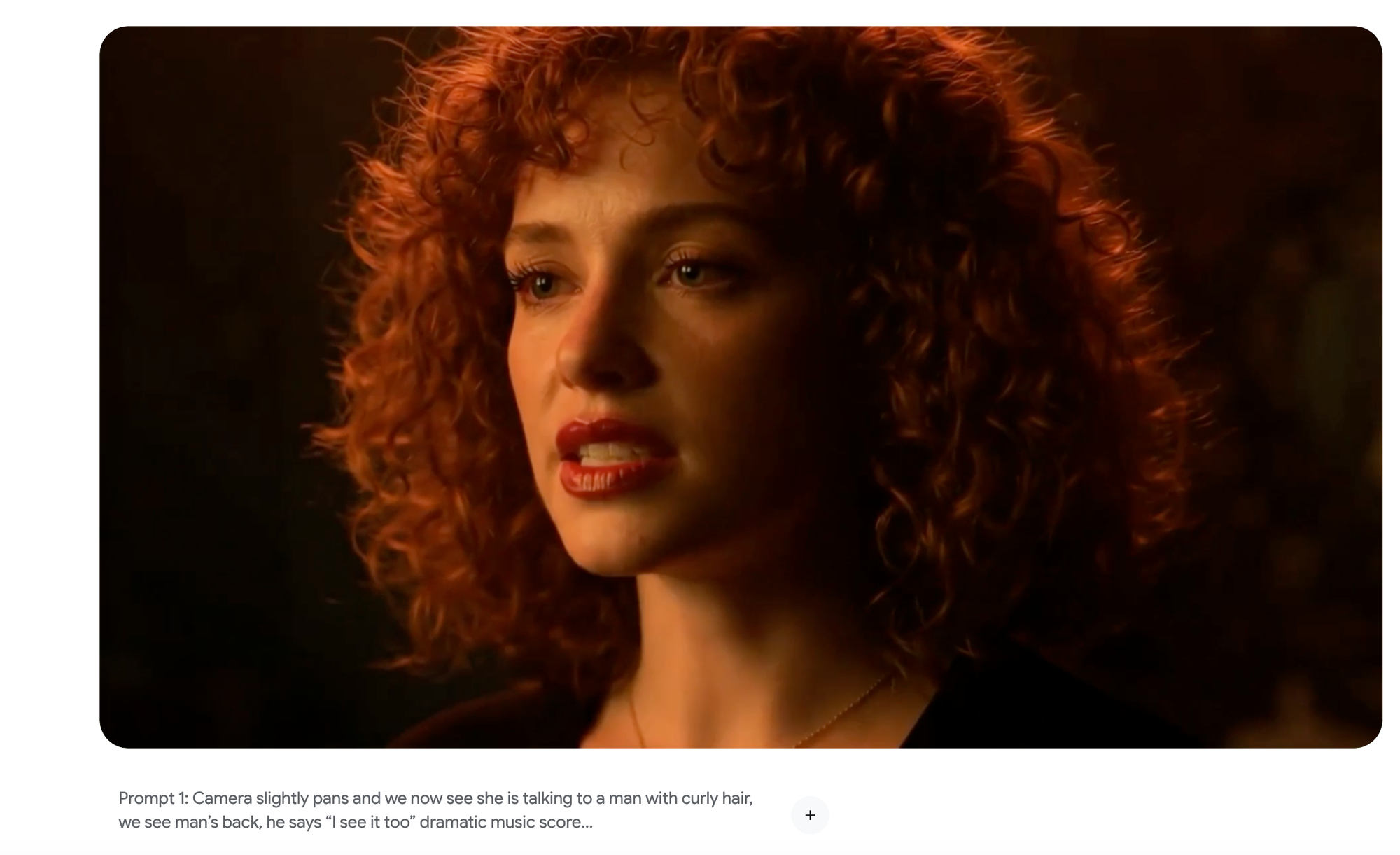
📋 The Details: The piece built for tight budgets is the 360p preview... rough drafts render fast and cheap, so you test an idea before paying to sharpen it, then push the keeper to 4K. All of it is live today through Google AI Studio and the Gemini Enterprise Agent Platform, aimed at developers building video software, not a consumer app.
🎯 Why You Need to Know: Scene extension, controlled framing, and cheap drafts are the difference between a slot-machine clip and video you can direct for an ad. The work that used to need a shoot and an editor keeps sliding into a text box.
⚡ Your Move: Open AI Studio and storyboard your next idea at 360p first... rough it in for near-nothing, see if it holds, and spend the 4K render only on the winner.
🚀 WATCH: How These AI Copy Bots Are Producing World-Class Sales Copy 50X Faster Than Even The "BEST" Copywriters On The Market…
(Plus… They Don't Get Sick, Miss Deadlines, Or Ask For Raises Either!)
Watch the full AI Copywriting Tell-All Video Here
Hershey Used AI to Decide Where S'mores Sell Best in Stores
S'mores are a $200 to $250 million business for Hershey in peak season, so it built its own AI to protect them. A proprietary tool used computer vision and augmented reality to decide where in a store to put the marshmallow-and-graham displays, then measured how each spot sold.
📋 The Details: The system has run in several thousand stores, where sales teams photograph a display and pair it with register data to see which locations work. Displays near camping gear drew strong interest, and pallet trains beat end caps by 101% in s'mores season. Hershey also put AI in its marketing-mix model, turning five months of spreadsheet work into an overnight job and lifting s'mores retail media return on ad spend about 20% year over year.
🎯 Why You Need to Know: The edge is reaction speed... reading where and when people shop as it happens, not months later. Tying the product to an occasion, down to the camping aisle, beat renting more shelf space.
📡 Watch For: Real-time marketing-mix modeling reaching mid-market ad tools. That overnight turnaround is what let Hershey react while the season was still on.
AI Now Shapes What Three in Four Shoppers Even Consider
Shoppers used to find products through search, reviews, and a friend's word. A new report from NIQ and World Data Lab adds a fourth: nearly 75% now use AI somewhere in product discovery, and it's starting to steer which brands make the shortlist.

📋 The Details: The report, A Tale of Two Consumers, pairs that figure with a $184 billion retail media market. Where people buy splits hard by region... nearly a third of Western consumers have bought something after spotting it on social, while 68% of North Americans never have, and close to 60% of Asia-Pacific shoppers already buy through social and quick-commerce.
🎯 Why You Need to Know: As recommendation engines do more of the shortlisting, whether your product surfaces comes down to how well its content and digital shelf are built for a machine to read. A vague listing drops out of the answers people act on.
📡 Watch For: Ask an AI assistant to recommend a product in your category, and see if your brand gets named. That answer is the new shelf position, worth checking before a competitor owns it.
A Court Just Revived an Antitrust Case Over AI Room Pricing
A federal appeals court has put an antitrust case back in play, and the defendant at the center is a pricing algorithm. The Third Circuit revived a lawsuit alleging that several Atlantic City casino hotels used a shared revenue platform, Rainmaker from Cendyn, to line up their room rates.
📋 The Details: The plaintiffs claim the hotels fed non-public information into a common system that handed back coordinated pricing. The court didn't rule that anyone broke the law... it decided the plaintiffs alleged enough to move forward, one of the first appeals-court looks at AI-driven pricing. The case now returns to the lower court.
🎯 Why You Need to Know: What draws antitrust scrutiny is competitors feeding non-public data into one shared tool, whatever sets the final price. Regulators treat that coordination the same whether it travels by phone, email, or software, so routing it through code doesn't wall you off from the rule.
⚡ Your Move: If a vendor sets your prices, ask plainly what feeds the recommendations... only public market signals, or non-public numbers pooled from competitors? Then confirm a human reviews the output before any price changes.
A UK Supermarket's AI Trolley Tallies Your Cart as You Shop
Matthew Byrne walked into a Lancashire Morrisons with an £80 budget and, for once, stuck to it. The store gave him an AI smart trolley that tallies each item as he drops it in, so the running total sat on a screen the whole trip.
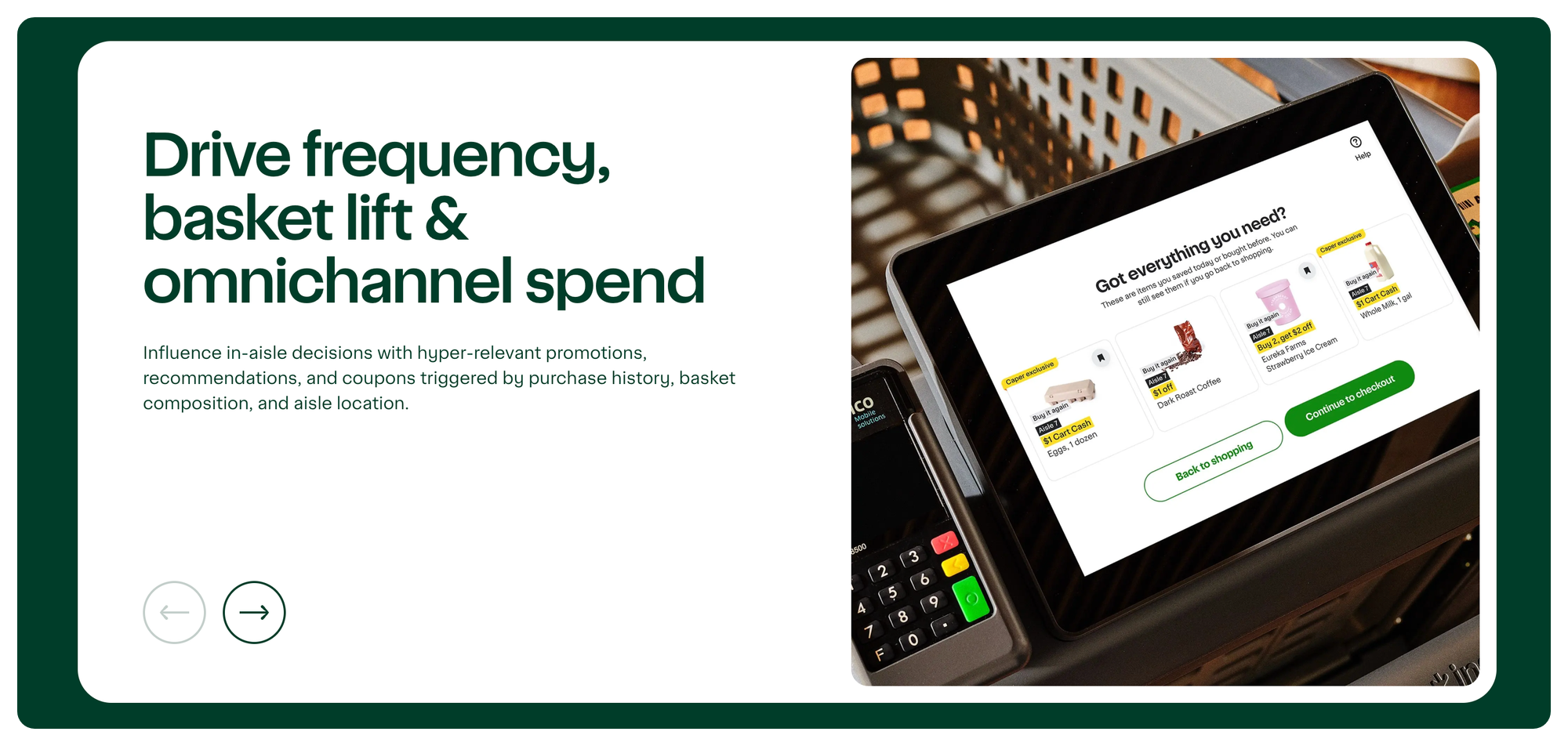
📋 The Details: The Caper trolleys come from Instacart and already roll through 100-plus cities worldwide, though this Morrisons in Ashton-on-Ribble is the first UK supermarket to try them. Each cart registers items on its own, adds up the cost, suggests related products, and lets you pay off the screen instead of queuing at a till. Morrisons wants them nationwide, in the same aisles where Amazon's just-walk-out shops flopped and closed in 2025.
🎯 Why You Need to Know: Those on-cart suggestions are retail media moving into the aisle itself, and the live budget tracker is why a shopper like Byrne keeps coming back to it.
📡 Watch For: Whether Morrisons takes this national, and whether those in-trolley recommendations become ad slots brands can buy. One early gripe worth tracking: shoppers say the carts are heavy and hard to steer.
Lotte's In-House AI Reads 4,000 Brands to Decide Who Gets Shelf Space
Lotte Department Store built an AI that watches more than 4,000 brands at once. Called Brand AI, it pulls data that once sat scattered brand by brand into one view, so merchandising teams see how a label is trending and how it ranks against rivals before they stock it.
📋 The Details: It maps brands as a 3D network, linking the ones people buy together, and its Brand DNA tool lines up to five rivals on a radar chart of sales. Staff took to it fast... within a month it logged a 70% return-user rate, and surveys said productivity on similar tasks more than doubled. Those are Lotte's own numbers, so weigh them that way.
🎯 Why You Need to Know: This is a buying team trading spreadsheets for one queryable picture of which brands earn their space. Later this year Lotte plans a chatbot you can just ask, like "show me the top 20 brands with the most shoppers in their 20s."
📡 Watch For: That chatbot launch. Plain-English questions reaching a buyer's analytics is the moment this stops being a dashboard and becomes something anyone can interrogate.
Nearly Every CMO Uses AI, and Many Are Scaling It Back
Almost every US marketing team has AI in the building now... 99% of CMOs in Censuswide's 2026 Voice of the US CMO report say they've adopted it somehow. The surprise sits underneath: across creative, video, and email, the share actually using generative AI slipped this year, and fewer say it beat expectations.
📋 The Details: The survey covered 500 US CMOs and 1,000 consumers. Generative AI use fell for ad creative (62% to 56%), video (55% to 48%), and email automation (55% to 47%), while "exceeded expectations" slid from 63% to 54%.
There's a comfort gap too: 59% of CMOs use AI for social content, but only 34% of consumers are comfortable with it.
🎯 Why You Need to Know: The pullback reads less like disappointment than CMOs getting choosy about where AI earns its place. That 59-versus-34 split means AI-made social posts can cost goodwill with a third of the people seeing them.
📡 Watch For: The next Voice of the CMO tells you which story this is. If usage keeps sliding, it's a deliberate rebalance toward the human touch; if it snaps back, this was a one-year dip.

AI Is Answering the Freight Industry's Endless Emails Now
The freight business runs on trucks and ships, but it books that freight over endless calls and emails asking one thing: what would this cost to move? C.H. Robinson, North America's largest freight broker, decided its people couldn't keep up and handed the replies to AI.
📋 The Details: Its in-house agents went from spotting which emails were quote requests to answering many within seconds. Vendors push further... Augment's Augie and Envoy's Ellie generate quotes and negotiate by email, phone, or text, inside guardrails, a human signing off before anything binds. FleetWorks says its calling agent took one carrier rep from about 150 loads a month to over 300.
🎯 Why You Need to Know: The work AI is eating is high-volume, low-judgment communication... quotes, status checks, back-and-forth that used to swallow whole days. That same load sits inside almost any operations-heavy business, so this won't stay in logistics.
⚡ Your Move: Find the message your team answers most often, the quote or the status ping, and see where an AI draft-and-route could take a first pass. Keep the guardrail these brokers use: a person approves before anything binding goes out.
SeatGeek Now Answers "Cheapest Club Seats for Weekday Mets Games"
SeatGeek put a search bar you can talk to inside its marketplace. Ask SeatGeek lets fans describe a ticket the way they'd tell a friend, like "popular outdoor concerts this week under $100," and get a full answer, not filters to click one at a time.
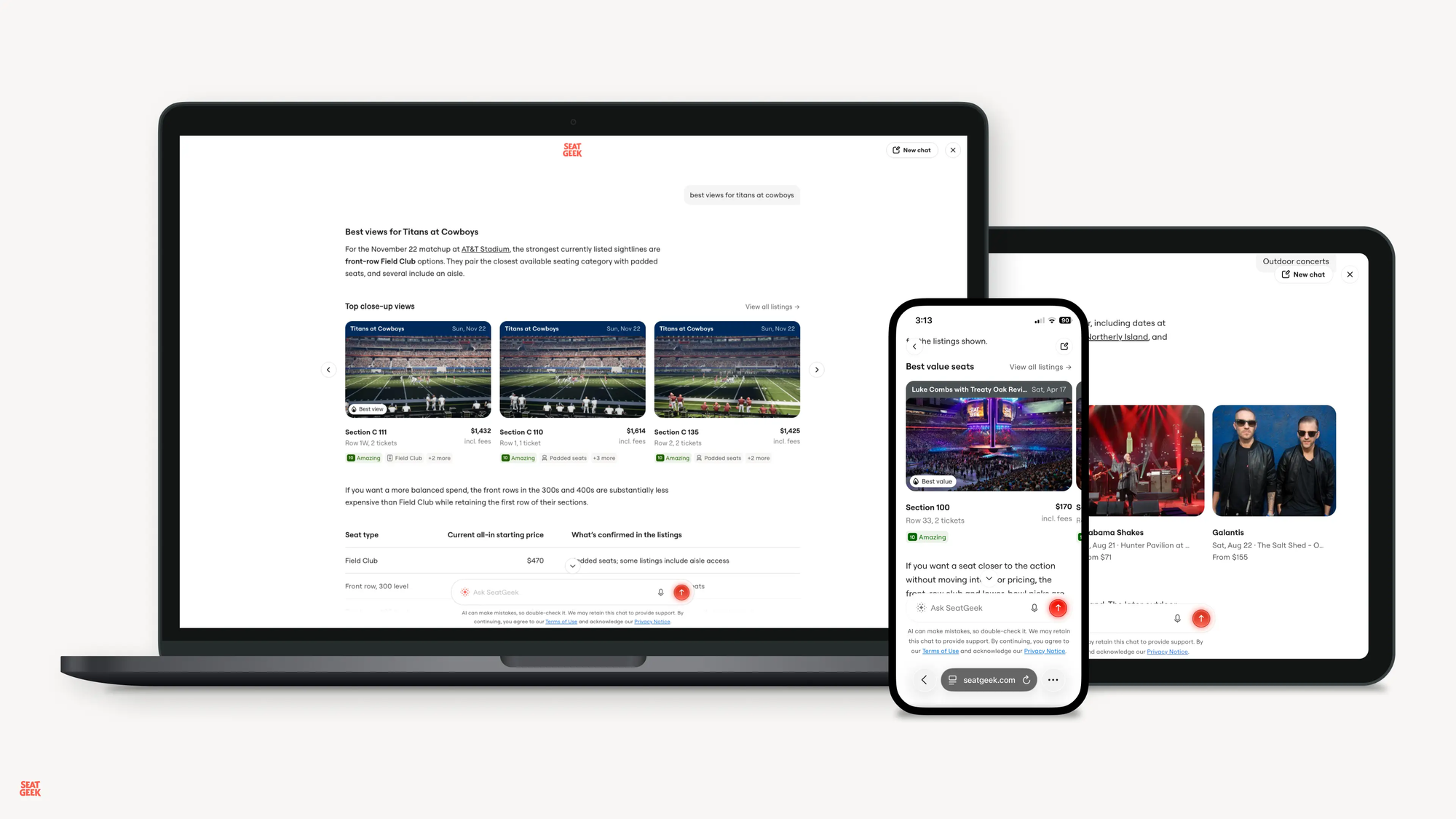
📋 The Details: It's rolling out now to desktop and mobile web at seatgeek.com/ask, with the apps to follow. Harder questions open the full experience, where answers come back as seat maps, view-from-seat photos, and Deal Score pricing, all drawn from 17 years of seat-level data. That depth lets it surface perks you didn't know to ask for.
🎯 Why You Need to Know: When a fan weighs price, sightlines, and timing in one sentence, the filter-by-filter interface every marketplace trained people on starts to feel like a chore. And "popular outdoor concerts near me" is a question no filter box ever had a field for, so venues get found on intent they couldn't target before.
⚡ Your Move: Run the vague, plain-English question your customers actually type, "something under $50 this weekend," through your own site search, and see if it returns anything useful.
Thanks for reading.
Until next time!
The AI Marketers
P.S. Help shape the future of this newsletter – take a short 2-minute survey so we can deliver even better AI marketing insights, prompts, and tools.
[Take Survey Here]
