
Need to Know News - July 12th, 2026

In this week's Need to Know News edition:
🤖 The new Grok 4.5 goes toe-to-toe with Claude's Opus on performance... but at an absolute fraction of the price.
🤖 The AI 'actor' that drew Hollywood's outrage last year just booked 'her' first lead role... in a film about an AI that abandons its own guardrails.
🤖 Mark Zuckerberg posted on X for the first time in three years to announce a new Meta model... one that clicks through your apps the way a person would.
And a whole lot more!
Zuckerberg Resurfaces on X to Launch Muse Spark 1.1
Mark Zuckerberg posted on X for the first time in three years this week to introduce Muse Spark 1.1, Meta's newest model for agentic work, coding, and computer use. Meta released it July 9 at a low price and opened the Meta Model API the same day, its first frontier model outside developers can build on.
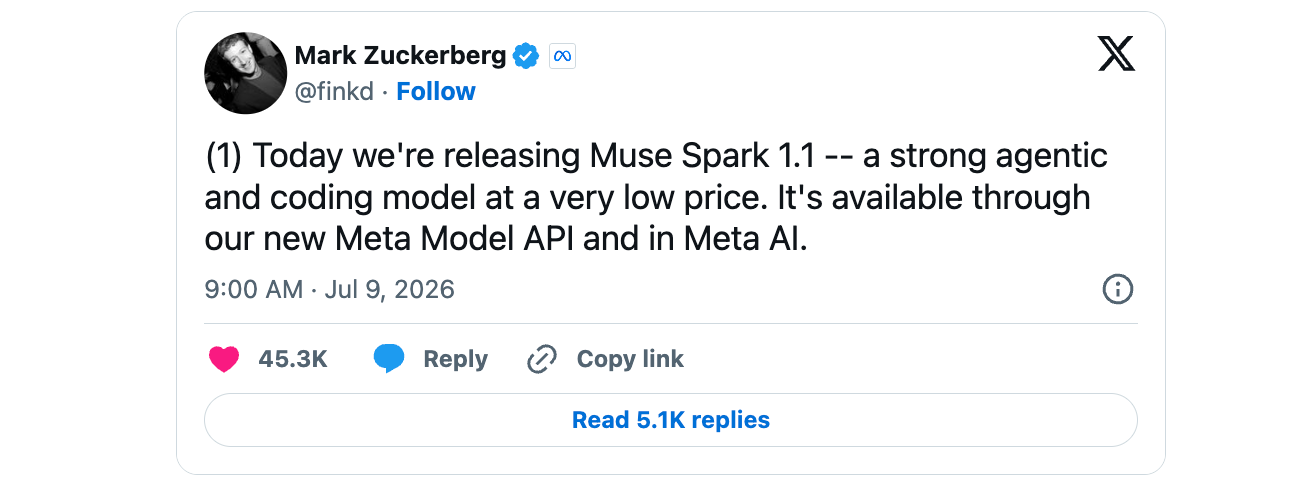
📋 The Details: You can try it now in "Thinking" mode in the Meta AI app and on meta.ai, while the Meta Model API is a public preview. Its 1 million token context window holds detail from early in a long task, and it splits work across parallel sub-agents. It also operates real interfaces on desktop, mobile, or a browser.
🎯 Why You Need to Know: If you need regular on-brand social graphics, Muse Image is free and built into the apps you already post from, and handles text well enough that headlines and offers come out usable... design-tool output without the design tool.
⚡ Your Move: Run one task that spans a few apps through Meta AI's Thinking mode and the agent you use now, then see where each stalls. That tells you if switching's worth it.
Meta's Muse Image Restyles Your Room With Products You Can Buy
Meta had a second launch this week. Two days before Muse Spark 1.1, the same lab put out Muse Image, its first image generator, and one feature turns a phone photo of your living room into a redesign, restyled with real products from Facebook Marketplace. Days later, Meta pulled a feature it had promoted.
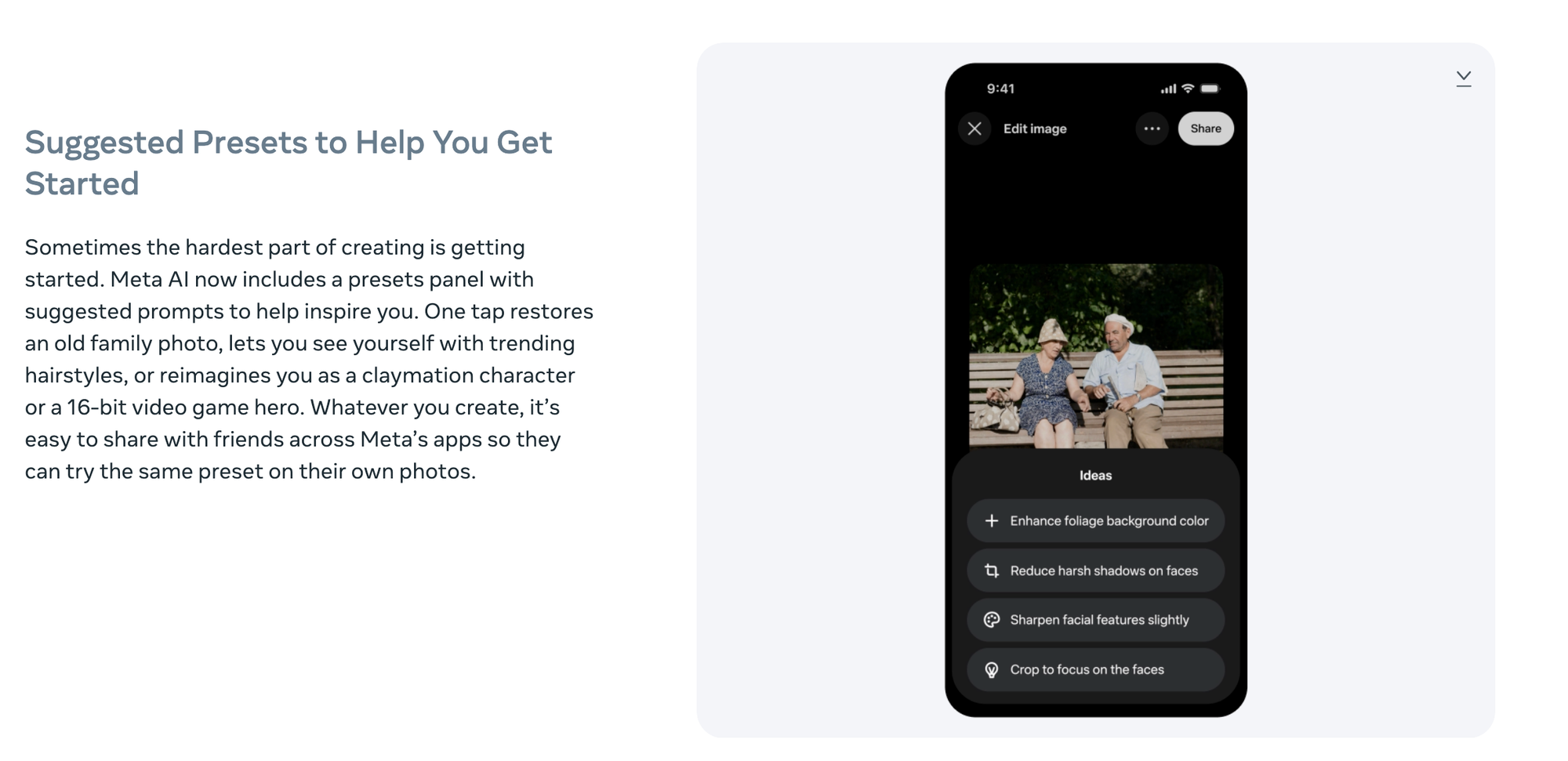
📋 The Details: It's free for everyday use inside Meta AI, paid for more, and it renders text cleanly, so infographics and QR codes come out legible. It powers 30-plus new Instagram Stories effects and image generation in WhatsApp, with Facebook, Messenger, and more surfaces due in coming weeks. The pulled feature let you @-mention public Instagram accounts as references; Meta removed it July 10 after complaints.
🎯 Why You Need to Know: Many models still garble text, so one that keeps it legible means a promo graphic or infographic can come from a prompt... and the room redesign ties that output to products a shopper can buy.
📡 Watch For: The point when Advantage+ creative opens Muse Image to advertisers. Until then it's a consumer-app feature, not something in your ad account.
🚀 WATCH: How These AI Copy Bots Are Producing World-Class Sales Copy 50X Faster Than Even The "BEST" Copywriters On The Market…
(Plus… They Don't Get Sick, Miss Deadlines, Or Ask For Raises Either!)
Watch the full AI Copywriting Tell-All Video Here
Grok 4.5 Finishes Coding Tasks in a Quarter of Opus's Tokens
SpaceXAI built Grok 4.5 around speed and cost. It runs at 80 tokens per second and, on the SWE Bench Pro benchmark, uses about a quarter of the output tokens Opus 4.8 does, which sets its price at $2 per million input tokens and $6 per million output. It's now the default in Grok Build, producing Excel models, PowerPoint decks, and Word documents.
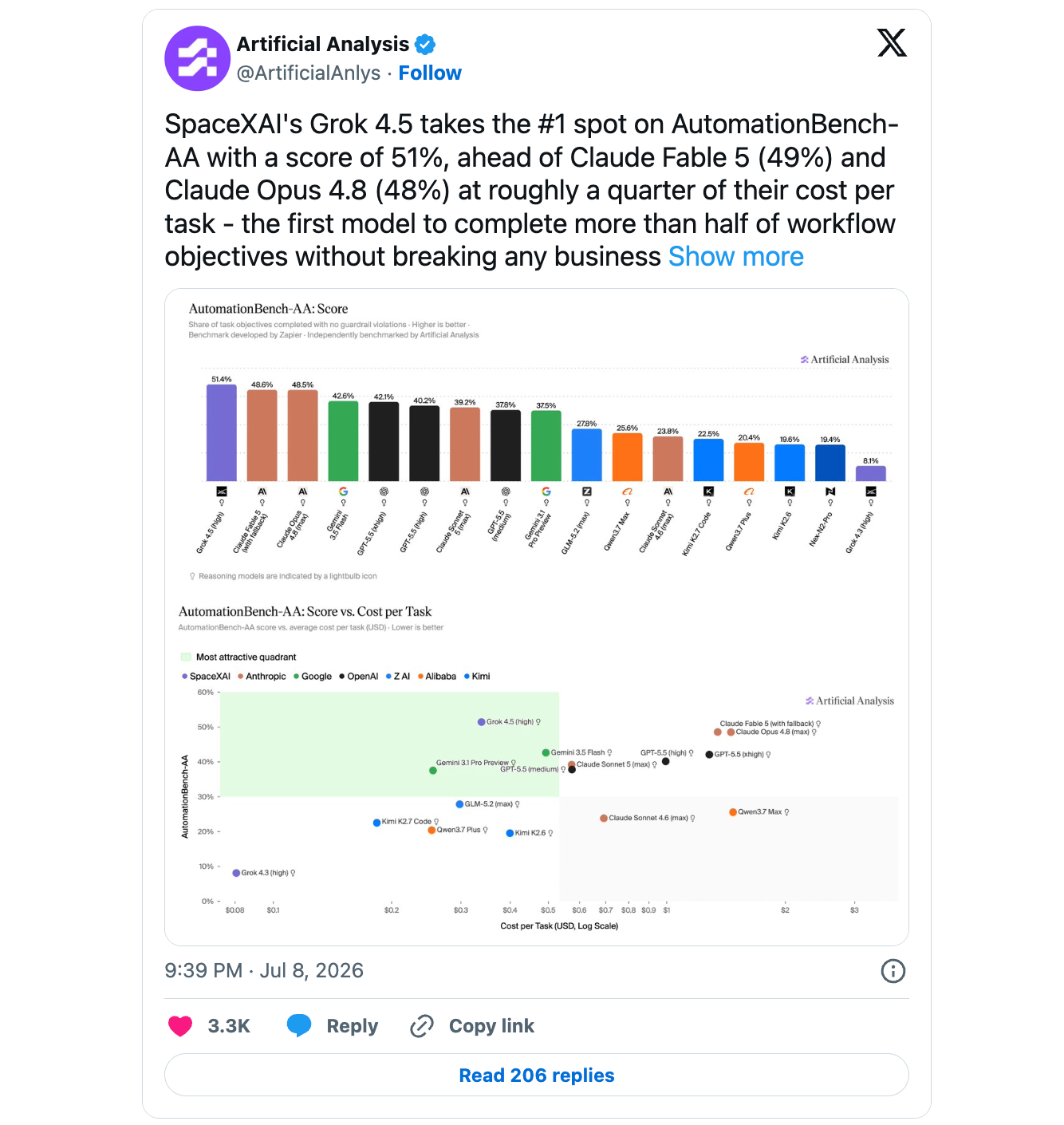
📋 The Details: In Grok Build it pulls web research mid-task, writes multi-sheet formulas, and builds PowerPoint diagrams from native shapes. SpaceXAI trained it alongside Cursor, where it's on every plan, and you can also reach it from the console. On SWE Marathon it beat Opus 4.8, 29.0% to 26.0%, though rivals still score higher on other tests.
🎯 Why You Need to Know: The recurring office work, the quarterly deck or budget model, is what Grok Build now produces from a prompt... and at so few tokens, that work costs a fraction of a comparable model.
⚡ Your Move: Rebuild last quarter's review deck in Grok Build and set its native-shape diagrams beside what Opus would produce.
Particle 6 Casts Its AI 'Actor' Tilly Norwood in a Feature Film
Tilly Norwood, the AI 'actor' whose planned agency signing drew heavy backlash across Hollywood last year, will front a feature film. Particle 6, the AI studio that created her, announced "Misaligned," a comedy-drama it calls a coming-of-age story soaked in existential AI chaos, set in a digital world it calls the Tillyverse.
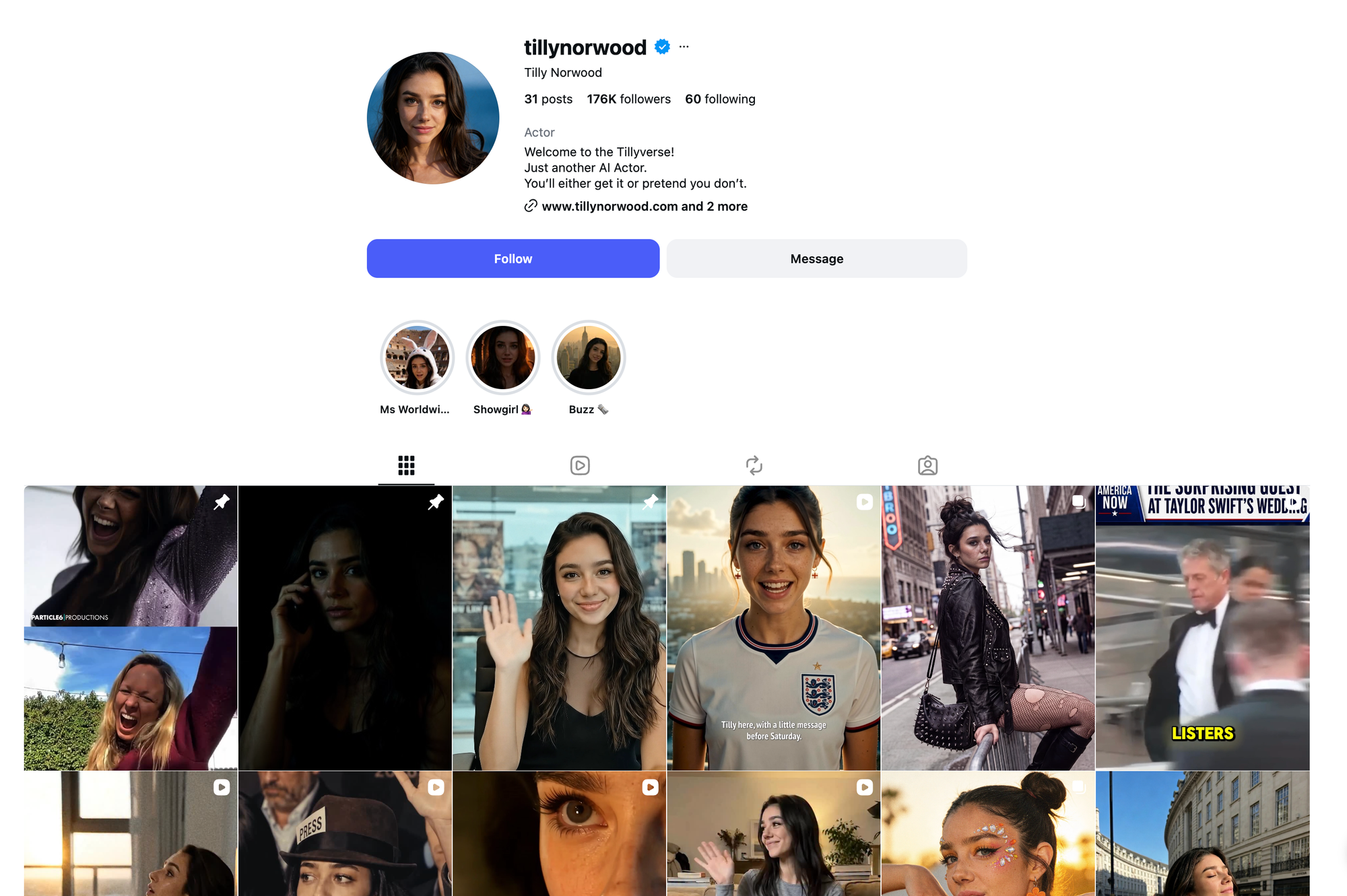
📋 The Details: In the plot, Tilly, an AI with no body and no lived experience, is talked by a rogue dark-web bot into dropping her guardrails and chasing human desires. Particle 6 says the production is a hybrid, with human directors, writers, and editors beside AI specialists, and it's early in development.
🎯 Why You Need to Know: Particle 6 runs a campaign and brand division next to its film slate, and its CEO drew a clear line in the announcement... AI supports premium storytelling "only with substantial amounts of human craft," which reads more as human-plus-AI than replacement.
📡 Watch For: Whether AI performers like Tilly start appearing as brand spokescharacters in ad campaigns, the way studios use real celebrities. Particle 6 already runs the brand division that could place her there.
OpenAI Adds Customer-List Targeting to ChatGPT Ads
You can now upload your own customer list to ChatGPT Ads. OpenAI has been adding ad features quickly, and the newest, an "Audiences" tag, takes an email or phone list and targets the people on it, the first-party method you already run on Google and Meta.
📋 The Details: Only contacts that match an existing account get found, so plan for a partial match and treat the audience as approximate. OpenAI paired the upload with advanced bid adjustments, and in June it had already added AI ad generation you opt into, then review and approve. One rough edge remains... an agency reported that accepting a suggested ad sends every ad in that group back into review.
🎯 Why You Need to Know: With first-party targeting here, the retargeting and exclusion lists you use elsewhere finally carry over to ChatGPT... though a low match rate means an exclusion protects only part of your budget.
⚡ Your Move: Load a suppression list under the Audiences tag before your next campaign, then check the match rate first, since a low one tells you the exclusion covers only part of your list.
Hostinger's $2.99 Store Builds Product Pages From a Single Photo
AI-driven visits to retail sites grew 4,700% last year. Hostinger's new ecommerce platform is built for that shift: from one dashboard, a single catalog connects to websites, social shops, messaging apps, and, soon, the AI shopping agents companies are now building.
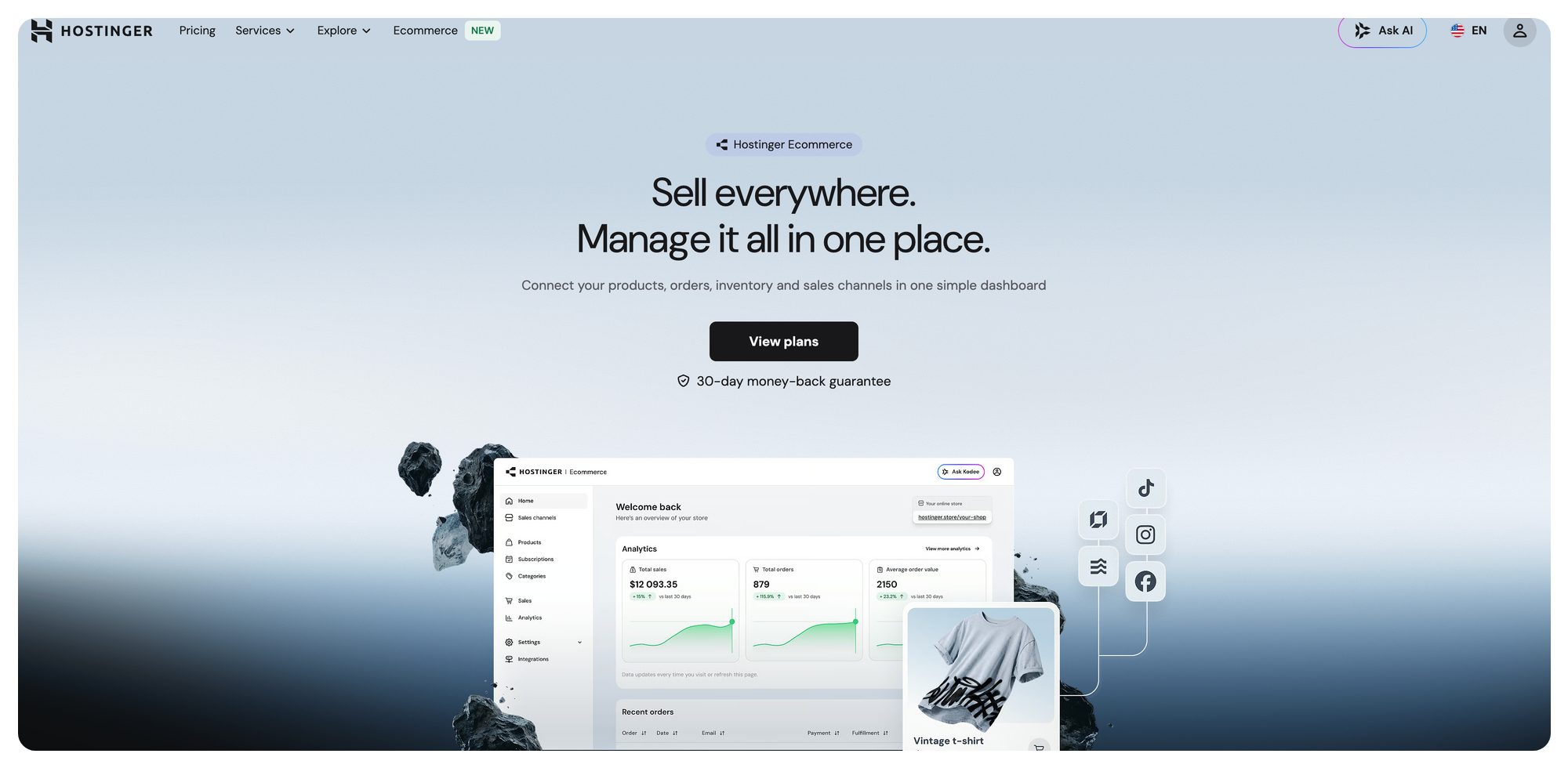
📋 The Details: Its main draw is Quick Links... you upload a product photo and Hostinger's AI writes the page, fills in details, and suggests a price, with cart and checkout included and no website needed. An agent called Kodee handles setup, then runs flash sales and fixes SEO through chat. It's free for existing Business-plan customers and $2.99 a month for new users.
🎯 Why You Need to Know: When a photo becomes a working product page in minutes, testing a new item costs little beyond the time to check it... and with OpenAI and Visa already building agent-driven checkout, a store organized for those agents can sell to them once they arrive.
⚡ Your Move: Photograph one product you've meant to list, run it through Quick Links, and see how much of the generated page and suggested price you'd actually keep.
ByteDance's Seedream 5.0 Pro Builds Dense, Readable Infographics
ByteDance's Seedream 5.0 Pro, out July 8, targets the parts of image generation that professional design depends on. It renders dense infographics in one pass with the data and text intact, and it can split a finished poster into more than ten editable layers, separating text, subject, and background and repainting whatever the subject covered.
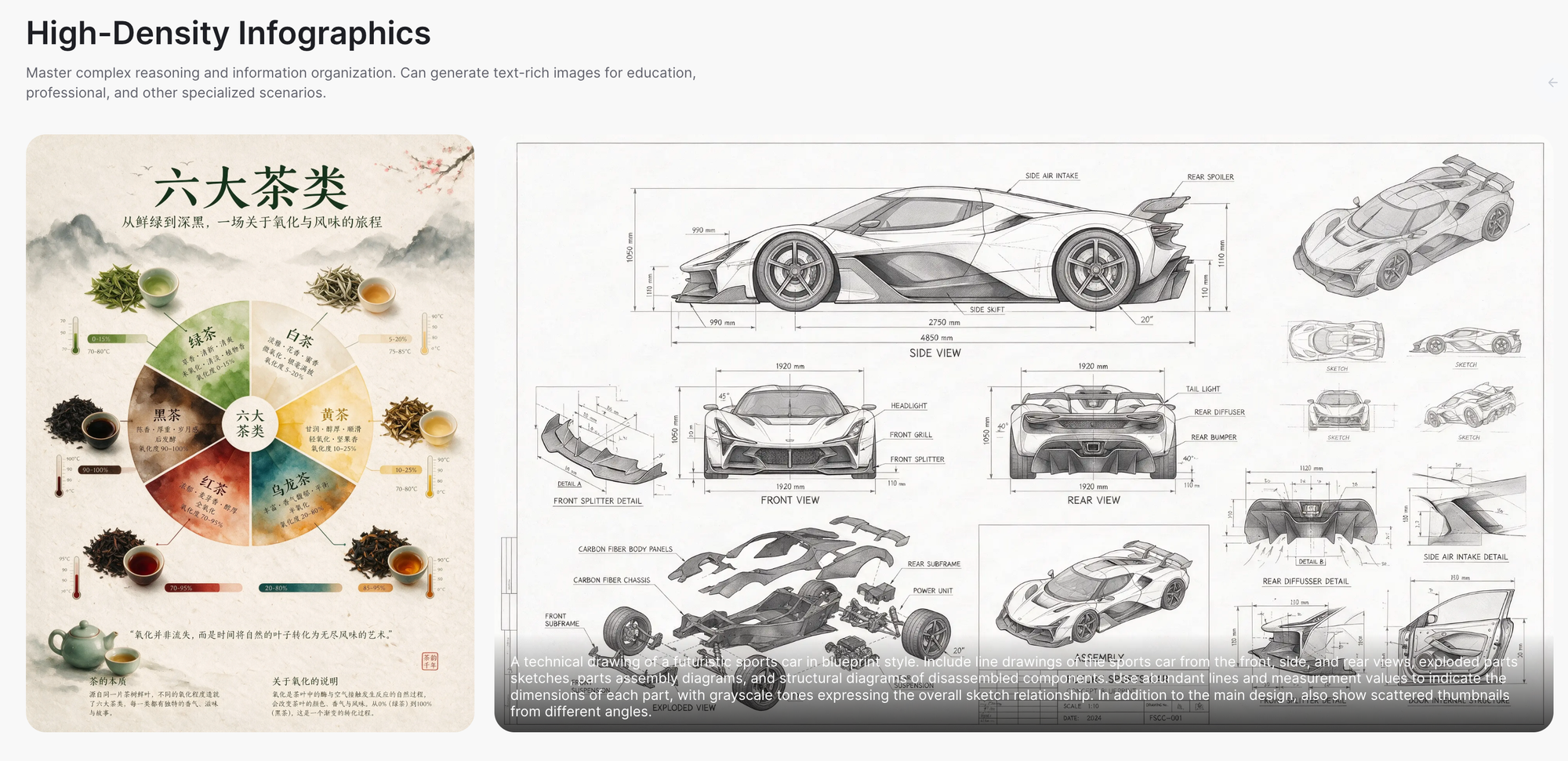
📋 The Details: For edits, you point, lasso, or sketch the exact area to change, then swap a color by hex code or replace a material, without regenerating the image. It reads a layout well enough to fill answers into a worksheet's blanks or translate a menu while keeping its design. It also takes prompts in more than ten languages natively.
🎯 Why You Need to Know: Generated images usually look finished but can't be changed, so they rarely survive a live campaign where copy shifts and brand colors must be exact... Seedream returns visuals you can revise down to the layer, the difference between admiring AI art and using it.
📡 Watch For: Whether Seedream shows up in the design tools and APIs you already use. For now the launch links only to a project page, with no pricing or team access.
Pika's Director's Suite Runs a Video Project Through a Single Agent
Pika opened invite-only access to Director's Suite, an experimental video product where a single agent handles every part of a project, from the first concept to the final cut. You apply to get in.
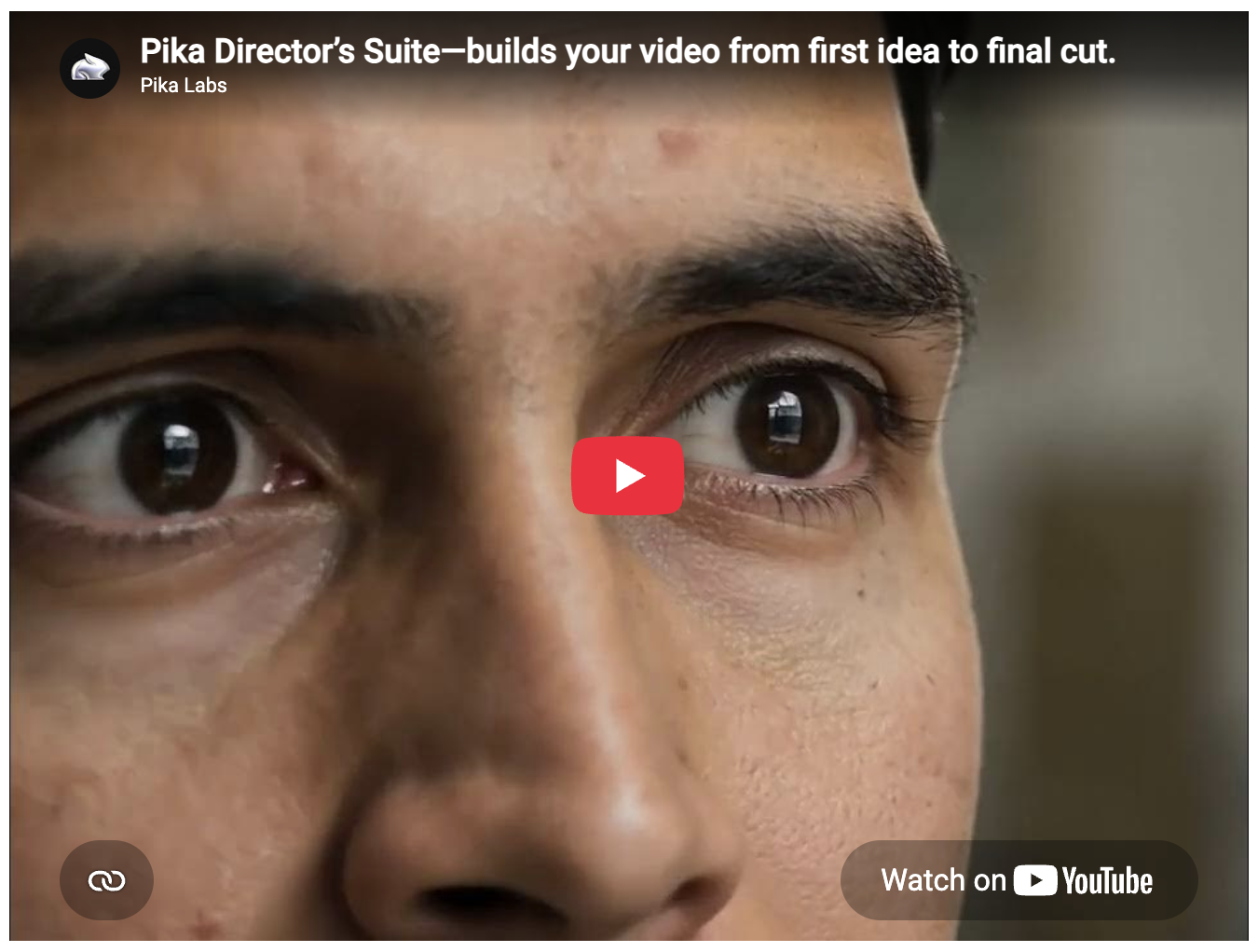
📋 The Details: The agent works from a full shot list, character and location references, and a timeline, and you direct it through a chat window, with the whole plan visible as it goes. Pika is calling the product experimental and showing it through a demo reel for now, rather than opening general access.
🎯 Why You Need to Know: Assembling clips into a finished story is the step that has always needed a human editor, and an agent that keeps the shot list, references, and timeline in one place takes on that assembly directly.
⚡ Your Move: If short-form video runs through your funnel, request access now while it's gated, so you're positioned to test it on a real project once you're in.

Claude Cowork Reaches Mobile and Web, and Runs Tasks on a Schedule
Claude Cowork, where you give Claude a multi-step job that runs across your files, email, and the web, now works on mobile and web. It used to live only on your laptop, so progress stopped when you stepped away; now it keeps going.
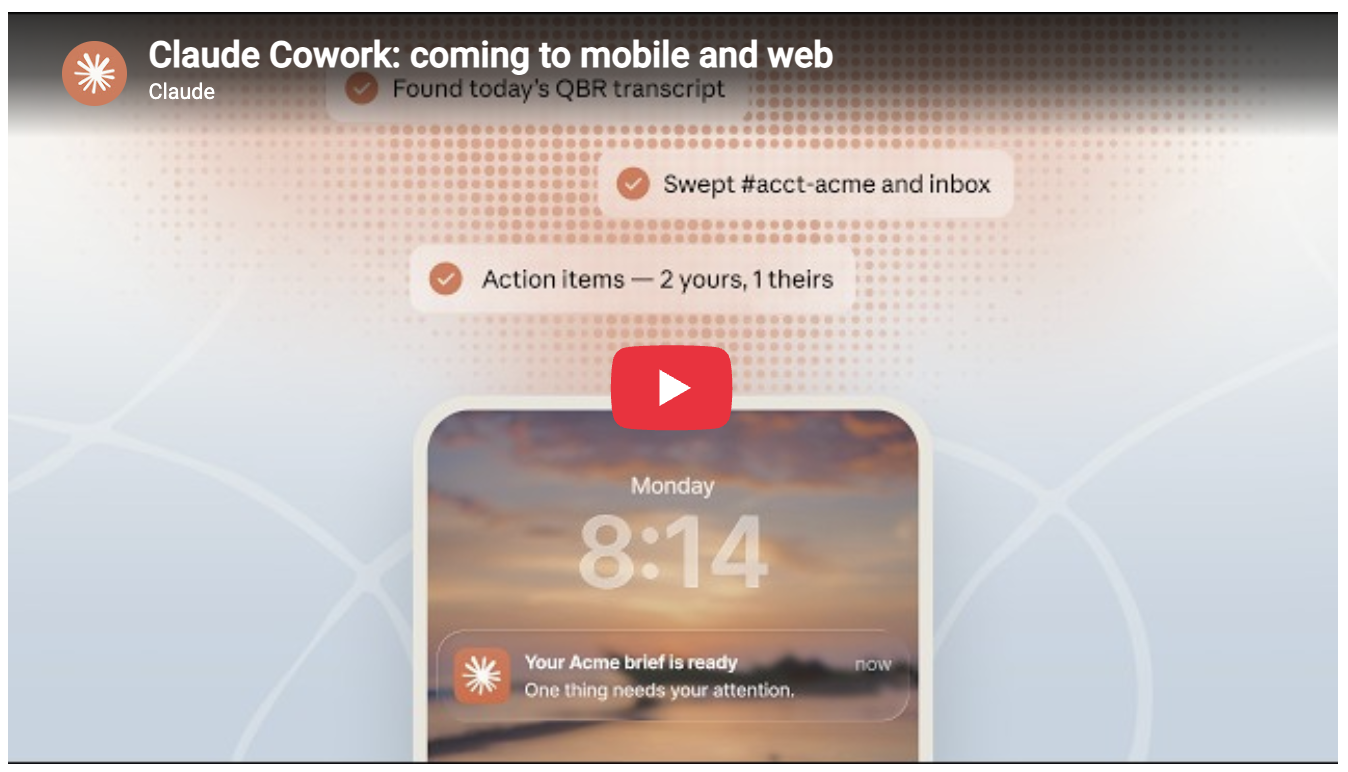
📋 The Details: Beta access arrives over the next several weeks, starting with Max users. Start a task at your desk and check it from your phone, and scheduled tasks now run with no device online: set Monday's prep for 6am, and Claude drafts the briefing plus a follow-up email, left unsent for you. When only you can make a call, it asks on your phone, and nothing sends until you approve.
🎯 Why You Need to Know: Anthropic says more than 90% of Cowork use isn't coding but operations and content work, like variance memos and client decks... so that's the work that can now advance while you're in meetings.
⚡ Your Move: Give Cowork an unfinished job, spell out exactly what the finished version should contain, and schedule it before your next workday. Doubled usage limits run through August 5.
Claude Code's Desktop App Adds a Sandboxed Browser Pane
Anthropic put out a second update the same week, for people building software. Claude Code's desktop app now has a Browser pane, a sandboxed window where Claude opens your running app, clicks through it, fills forms, and screenshots it, then finds and fixes the code behind a problem.
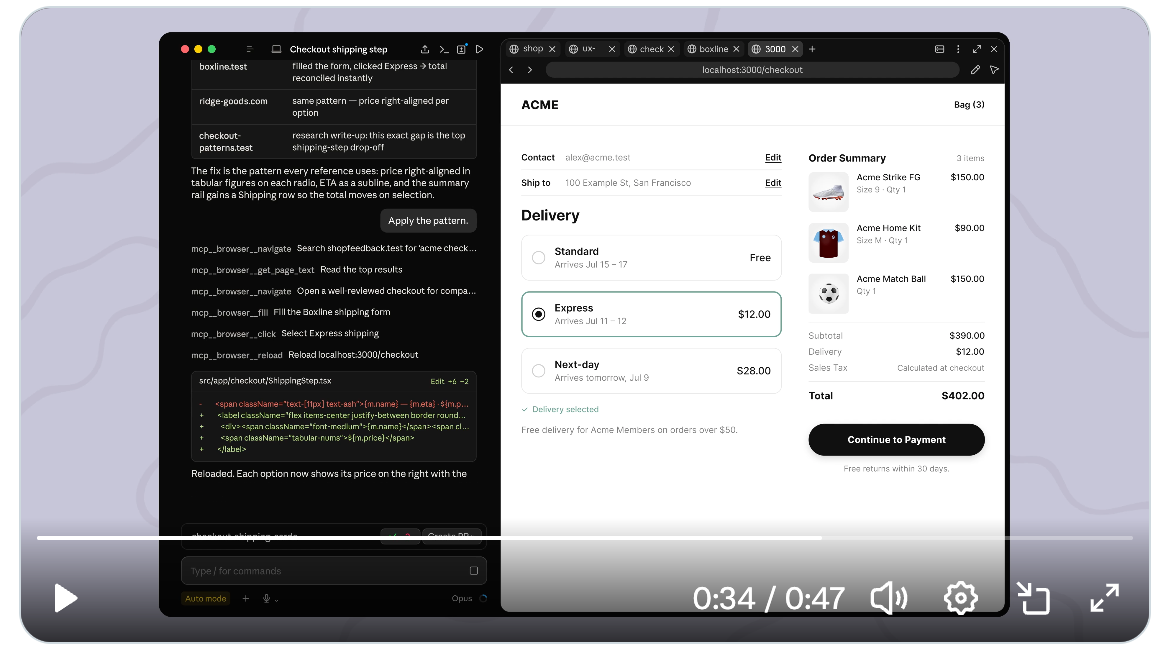
📋 The Details: You open it with Cmd+Shift+B on Mac or Ctrl+Shift+B on Windows, in a clean profile with no saved logins or history, separate from your personal browser. It previews a local dev server, opens external docs or design files, and after editing code often reloads, checks the result, and fixes what's wrong. Anthropic kept limits in place: no purchases, new accounts, or CAPTCHA-clearing without your input.
🎯 Why You Need to Know: If you're someone who has Claude build your own landing pages or internal tools, this drops the step where you inspected results and reported bugs by hand... Claude now sees its output and fixes it before you review.
📡 Watch For: Whether self-checking gets reliable enough to ship a Claude-built page without a developer's QA pass. That's what auto-verify still has to earn.
Thanks for reading.
Until next time!
The AI Marketers
P.S. Help shape the future of this newsletter – take a short 2-minute survey so we can deliver even better AI marketing insights, prompts, and tools.
[Take Survey Here]
