
Need to Know News - October 30th, 2026

In this week's Need to Know News edition:
🤖 Meta's AI ad engine now reads what your creative is selling... so fresh launches can reach the right buyers sooner.
🤖 Shoppers reward brands that get personalization right with bigger baskets... and Deloitte found the one move they prize most.
🤖 Jack Dorsey's Block built a voice AI that never saw a word of text... and it chats with the warmth and timing of a real person.
And a whole lot more!
Meta Rebuilds Its Ad Ranking Engine With LLMs That Read Your Ads
Meta tore open the machinery that picks which ad each person on Facebook and Instagram sees, overhauling three layers at once. One layer now runs on LLMs that read what an ad is selling, giving a brand-new ad a head start on finding its people.
📋 The Details: Meta calls that piece GenRecs. It tags every ad by traits like brand and style, read from the ad's text and images. That lets a new product borrow what Meta knows about similar ones, so it gets through the learning phase sooner. Matt Steiner, the Meta VP who oversees ad ranking, is careful to add that new ads still have to prove themselves.
🎯 Why You Need to Know: None of this asks you to change a setting, Steiner says. He's blunt about the audience segments you build by hand, though. The importance of targeting is "diminishing over time," he says, as Meta's models get better at picking who an ad suits. And since GenRecs reads every image and line of copy, your ad does more of its own audience-finding now.
⚡ Your Move: Write your next product ad so a machine can't mistake what it's selling, with the brand and product type named in the copy. Track whether it clears the learning phase faster than your last launch.
AI-Referred Shoppers Now Bring Retailers 83% More Revenue per Visit
A year ago, a shopper who clicked through from an AI chatbot was worth less to a retailer than the average visitor. According to Adobe's latest data, that same shopper is now worth nearly twice as much... and the holiday rush hasn't even started. By the time these visitors land on a site, the AI has done the comparison shopping, so many show up ready to buy.
📋 The Details: AI-referred visitors converted 90% better than everyone else in September, the widest gap Adobe has measured across more than 1 trillion US retail visits. Each of those visits brought in 83% more revenue, and Adobe expects that edge to double over the holidays.
🎯 Why You Need to Know: Plenty of retail pages are hard going for the AI deciding where to send those shoppers. By Adobe's Citation Readability Score, the average US retail homepage hits 63%, which leaves more than a third of it invisible to AI. Electronics does better, at 79%, helped by setup guides and detailed specs, while cluttered general merchandise homepages sink to 40%.
⚡ Your Move: Take the questions your support team fields most every holiday season and answer them on your best-selling category page before Thanksgiving. Adobe found AI reads explanatory pages best, like buying guides and FAQs.
🚀 WATCH: How These AI Copy Bots Are Producing World-Class Sales Copy 50X Faster Than Even The "BEST" Copywriters On The Market…
(Plus… They Don't Get Sick, Miss Deadlines, Or Ask For Raises Either!)
Watch the full AI Copywriting Tell-All Video Here
OpenAI's GPT-6.1 Terra Brings Near-Flagship Computer Use at a Tenth the Price
The dull computer chores that pad a workday, like filling out forms or keying in invoices, now have a cheaper AI to hand them to. OpenAI's new GPT-6.1 Terra can read a screen and work the apps on it nearly as well as the company's priciest models. It writes more clearly than the Terra it replaces, too.
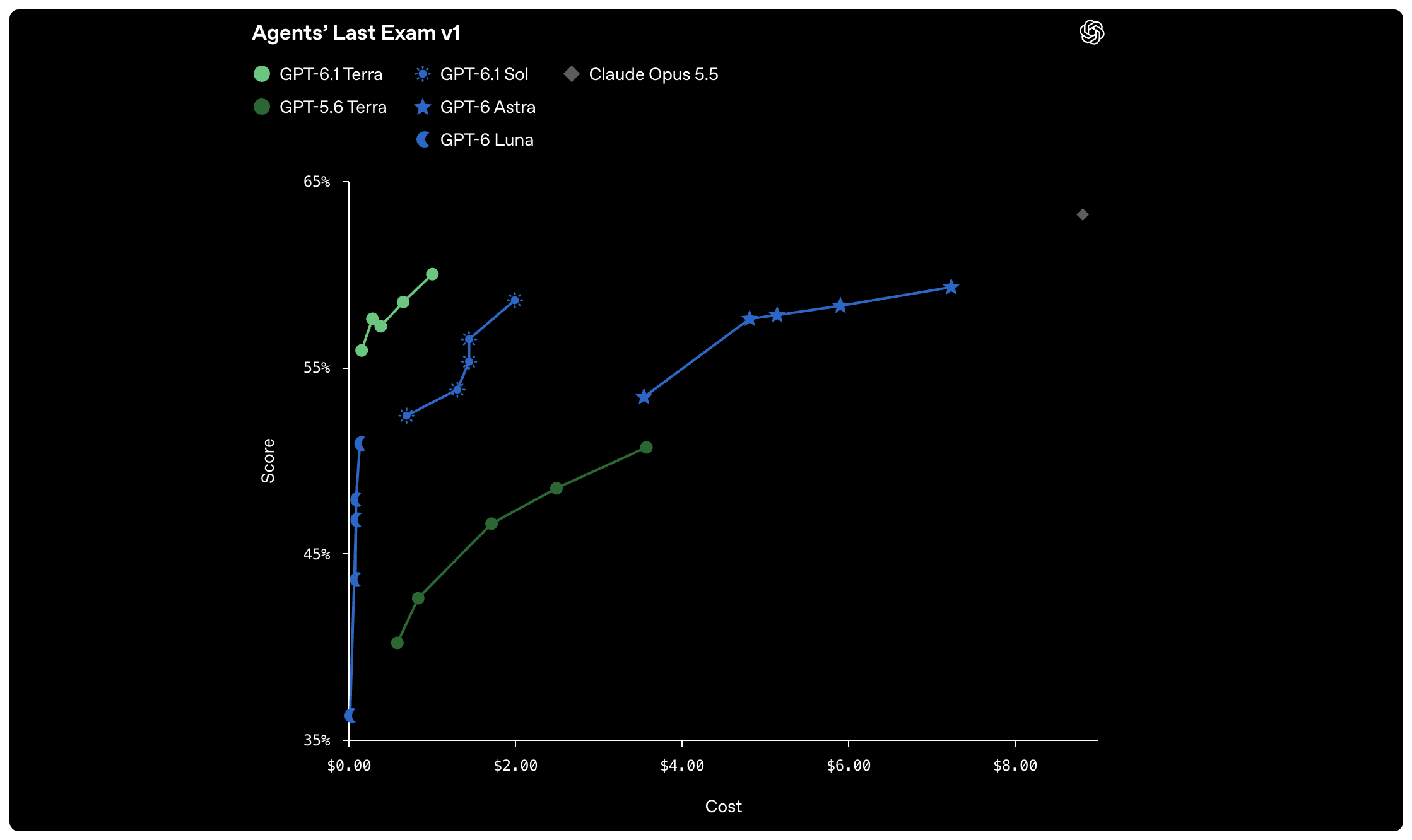
📋 The Details: OpenAI put it through Agents' Last Exam, a set of professional jobs like turning architectural drawings into a 3D model. Terra matched GPT-6 Astra at a tenth of the price per token. In dollars, developers pay $1 per million input tokens and $5 per million output, half of what GPT-6.1 Sol charges. Everyone else on Plus, Pro, Enterprise or Edu can switch to it today in ChatGPT Work and Codex.
🎯 Why You Need to Know: Fewer made-up facts count for a lot once Terra drafts your proposals. On OpenAI's internal test of prompts built to trip models up, its low-effort error rate fell from 53.6% with the old Terra to 16.7%. And those drafts eat less of your plan, since the same Work or Codex allowance covers more tasks than GPT-5.6 Terra did.
⚡ Your Move: Feed Terra the notes behind a recent client proposal and ask for a clean draft. Before you read for style, highlight every claim you can't trace back to those notes.
Shoppers Grade Brand Personalization Far Lower Than Brands Do
Brands and their customers are grading personalization on wildly different curves, according to new Deloitte Digital research that surveyed both. Shoppers lean on AI to find what to buy, and they say they'll spend more with brands that tailor the experience to them. Most just don't think brands are pulling it off... while brands give themselves glowing marks.
📋 The Details: Across 1,000 consumers and 480 brand leaders, nearly nine in 10 brands rated their personalization good or excellent. Fewer than three in 10 shoppers would give it that grade. The two sides can't even agree on how much personalizing happens. Brands think they tailor 62% of customer experiences, while shoppers say only 44% feel personal.
🎯 Why You Need to Know: If your team scores personalization by how many experiences it touches, Deloitte's shoppers are grading something else. Two-thirds value it when a brand fixes a problem before they have to ask, the top reason on Deloitte's list. And getting it right pays, since the 52% who favor brands that personalize say they spend 30% more with them.
⚡ Your Move: Time how long your team takes to act on fresh customer data, from its arrival to the first offer that changes because of it. Deloitte's brands average 4.7 business days, so anything slower puts you behind the pack.
Microsoft Advertising's Holiday Update Gives AI the Setup and You the Controls
Microsoft Advertising's October update lands just before the holiday rush, with something for two kinds of advertisers. Newcomers get AI that sets up a whole campaign from materials they have on hand, in minutes. Advertisers running AI-driven campaigns get more say over who that AI targets and what it writes.
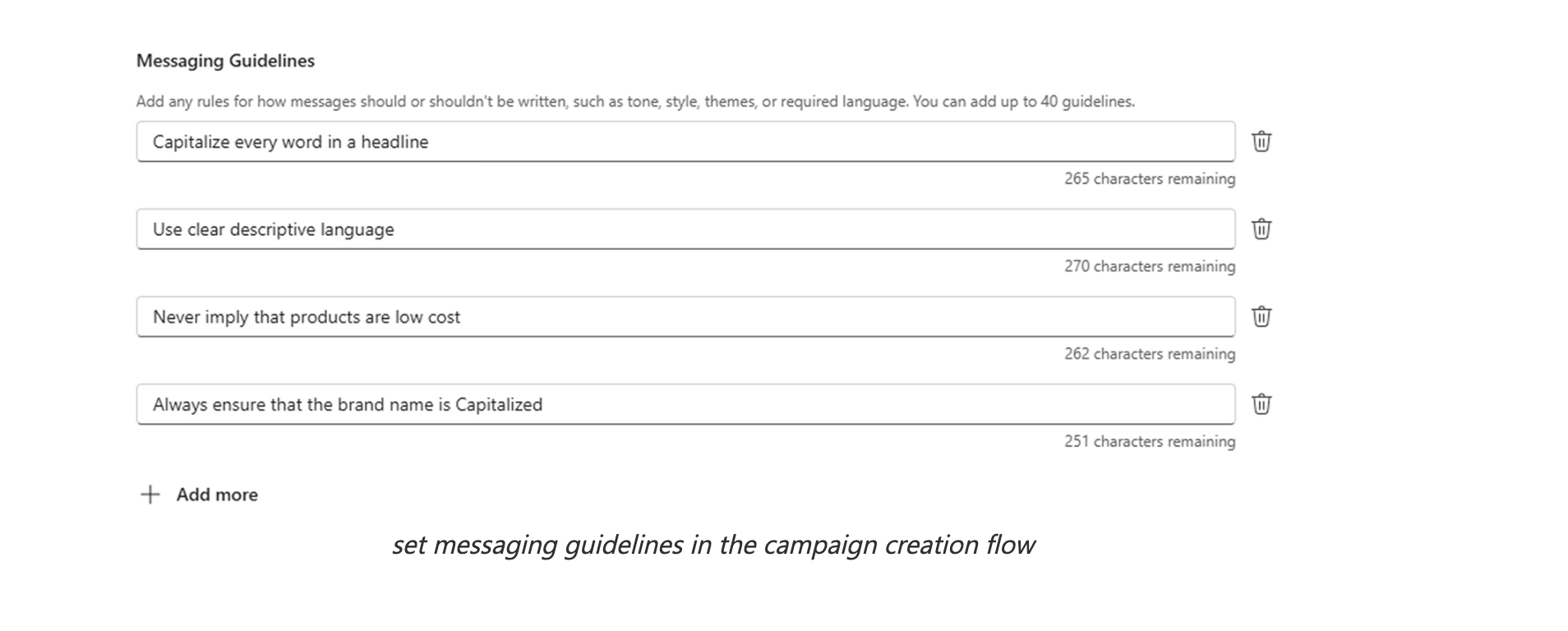
📋 The Details: That setup tool reads your website plus whatever else you share, like brand guidelines and product images. Out of that, it builds an editable snapshot of your business and a Performance Max campaign you can launch as is or tweak first. Running campaigns pick up controls, too, with age and gender targeting now open to every Performance Max advertiser.
🎯 Why You Need to Know: Microsoft's AI bidding is only as sharp as the sales data you feed it. Conversions API, now generally available, sends conversions from your CRM or point-of-sale system straight to Microsoft. That catches activity your website tag can miss because of browser limits, so the bidding gets a fuller picture of who actually buys.
⚡ Your Move: Messaging guidelines, now in open pilot for Performance Max and AI Max Search campaigns, let you set up to 40 rules for AI-written copy. Before holiday launches, turn your brand team's usual fixes into rules like Microsoft's example: "Never imply that products are low cost."
Google's Gemini 4 Carbon Tops Argon, and Cyber Defenders Get It First (Again)
Google opened Gemini 4 Argon to every paying customer two weeks ago, and it already has a stronger model waiting behind it. The newcomer, Gemini 4 Carbon, takes on engineering work that runs for days, along with finding and fixing security holes in software.
It's also more careful than Argon about admitting what it doesn't know, though you'll have to wait your turn to try it.
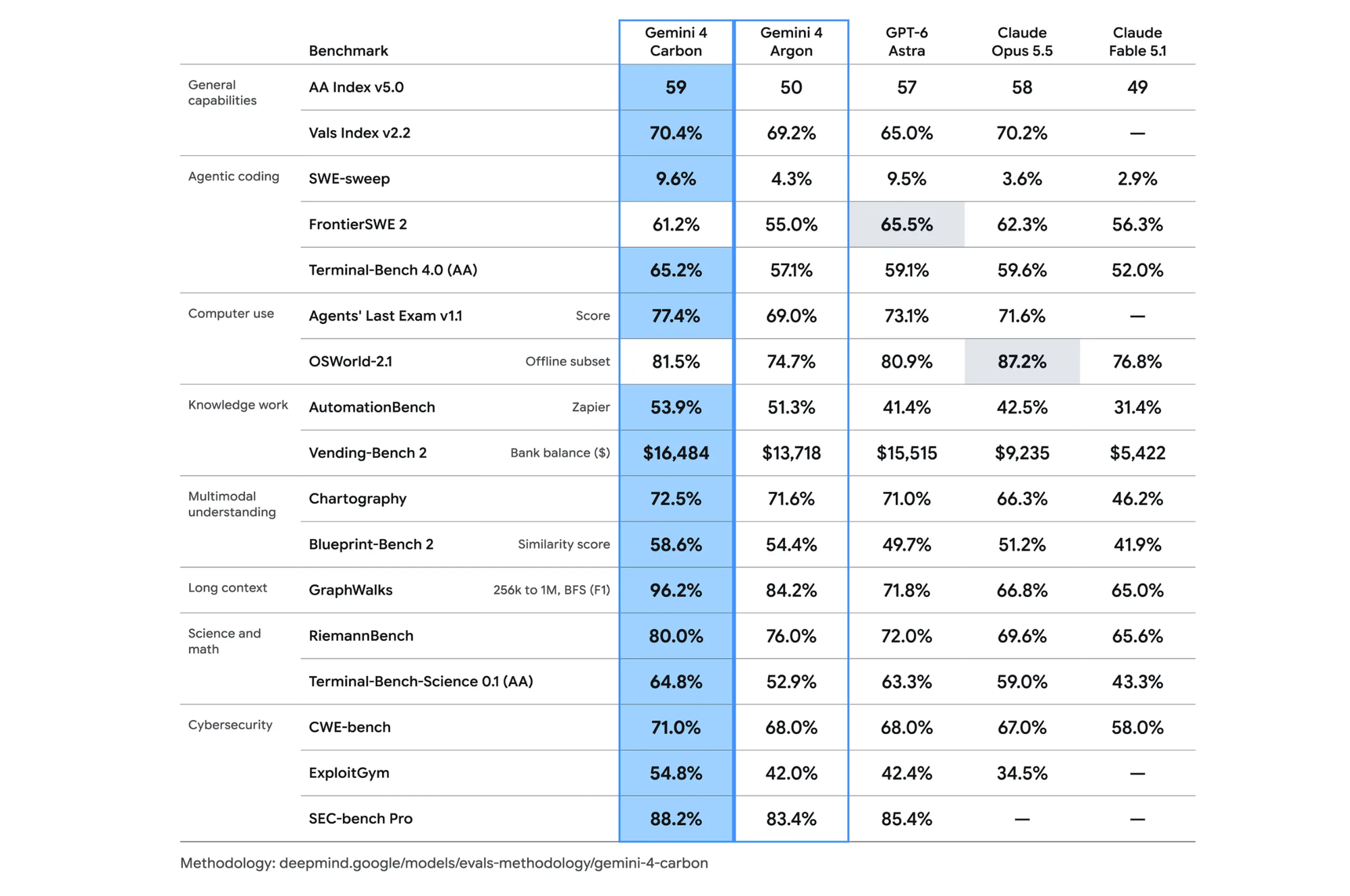
📋 The Details: Google says Carbon ranks #1 on Artificial Analysis's Intelligence Index, an outside scoreboard. The line to try it starts with a subset of cyber defenders this week, and more trusted partners follow through Google's Fairwind Program. Developers and businesses are further back, waiting while Google tunes the guardrails.
🎯 Why You Need to Know: Give Carbon a fuzzy brief and it pulls the relevant sources and points out where they disagree before acting on anything. And when the evidence runs out, it writes the caveat into the finished work, part of how Google says it halved unsupported claims versus Argon.
📡 Watch For: Circle November 30, when Argon's introductory price of $2 and $10 per million input and output tokens doubles to $4 and $20. Carbon is slated for the same intro price, so if developers get in after that date, see which rate Carbon opens at.
Gen X Lets AI Help Shop but Keeps the Wallet
Over one working life, Gen X went from typewriters to smartphones and learned to tell useful tools from merely new ones. A new PYMNTS Intelligence study finds the generation, now roughly 46 to 61, putting AI shopping tools through that same test. It's glad to let a chatbot do the research, then it makes the call and pays the way it always has.
📋 The Details: Only 23% of Gen Xers would let an AI agent do their shopping and buying, a little behind millennials at 27%. The holdouts tell the generations apart, since 28% of Gen X want agents handling none of their personal tasks, against 20% of millennials.
🎯 Why You Need to Know: Gen X warms to agents for chores with clear rules, like managing subscriptions, where 34% are very or extremely interested. Move to a judgment call like gift buying, and interest slips to 27%. If you sell something that renews on a schedule, that's where an agent is likeliest to get the job.
📡 Watch For: PYMNTS keeps counting the Gen Xers who skip AI entirely, and that share has bounced between 42% and 49% since January. A reading under 42% would mean that group is finally shrinking.
Runway's App Studio Packages Your Best Creative Workflow as a Team App
On most creative teams, the knack for a usable AI shot lives in one person's prompts and settings, Runway says, so everyone else waits. Runway's new App Studio lets that person describe the tool they wish existed and get back a working app, no coding needed. The whole team can then run it and pull an on-brand asset whenever they need one.
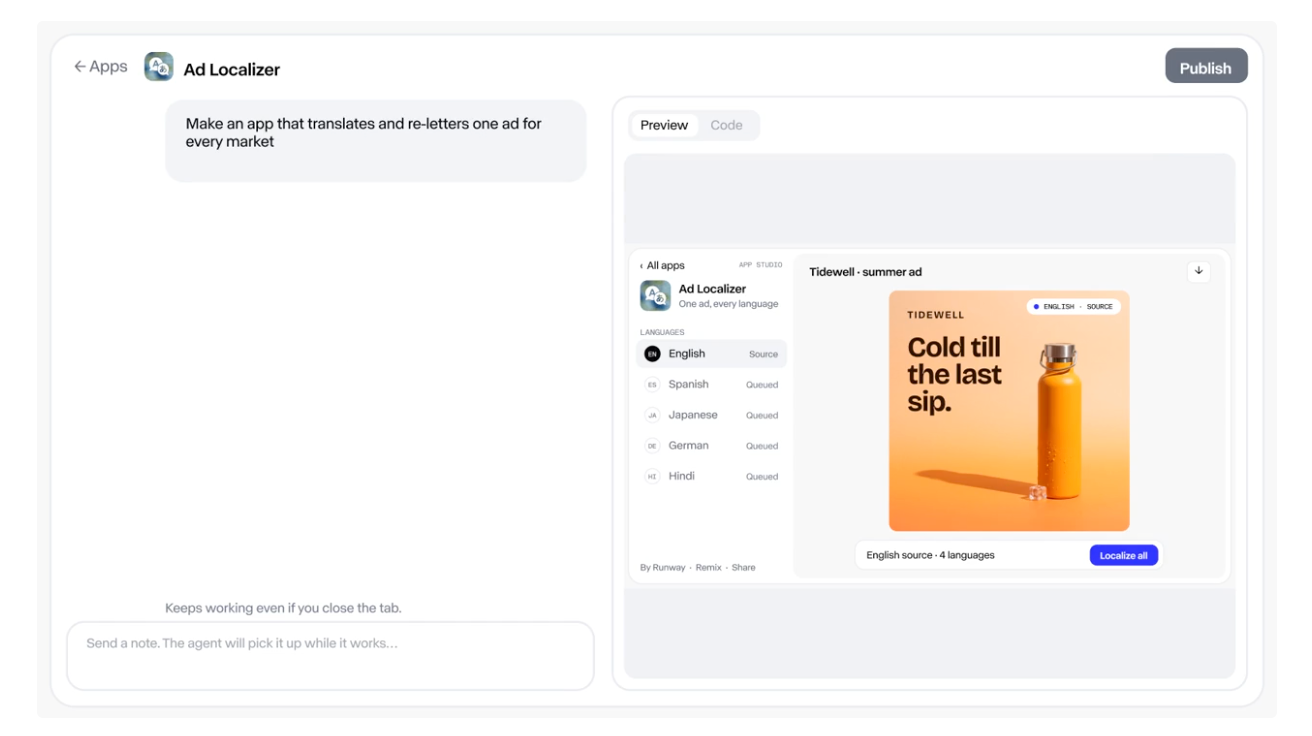
📋 The Details: You don't have to start from a blank page, either. App Studio ships with ready-made apps like AutoComp, which drops a product into existing footage with the label intact. And if one of your Runway Workflows gets the result you want, one click turns it into an app. The prompt and settings stay locked, so teammates only see the inputs they need.
🎯 Why You Need to Know: There's no add-on to buy, since App Studio is included in every paid plan and runs on your existing Runway credits. Share a public link and visitors pay for what they generate, so a tool you build for a client won't run up your bill.
⚡ Your Move: Ask your team's best Runway user to turn their go-to Workflow into an app this week. Have your newest hire run it on a live brief without asking that teammate for help, and note whether brand review signs off.

Block's Dessa Voice AI Learned to Talk Without Reading a Word
Babies pick up language just by listening, and a small AI research lab at Block trained a voice model the same way. Most voice AI turns a caller's speech into text and loses the tone along the way. Dessa never touches text, so it can hear sarcasm or a frustrated sigh and answer with emotion in its voice.
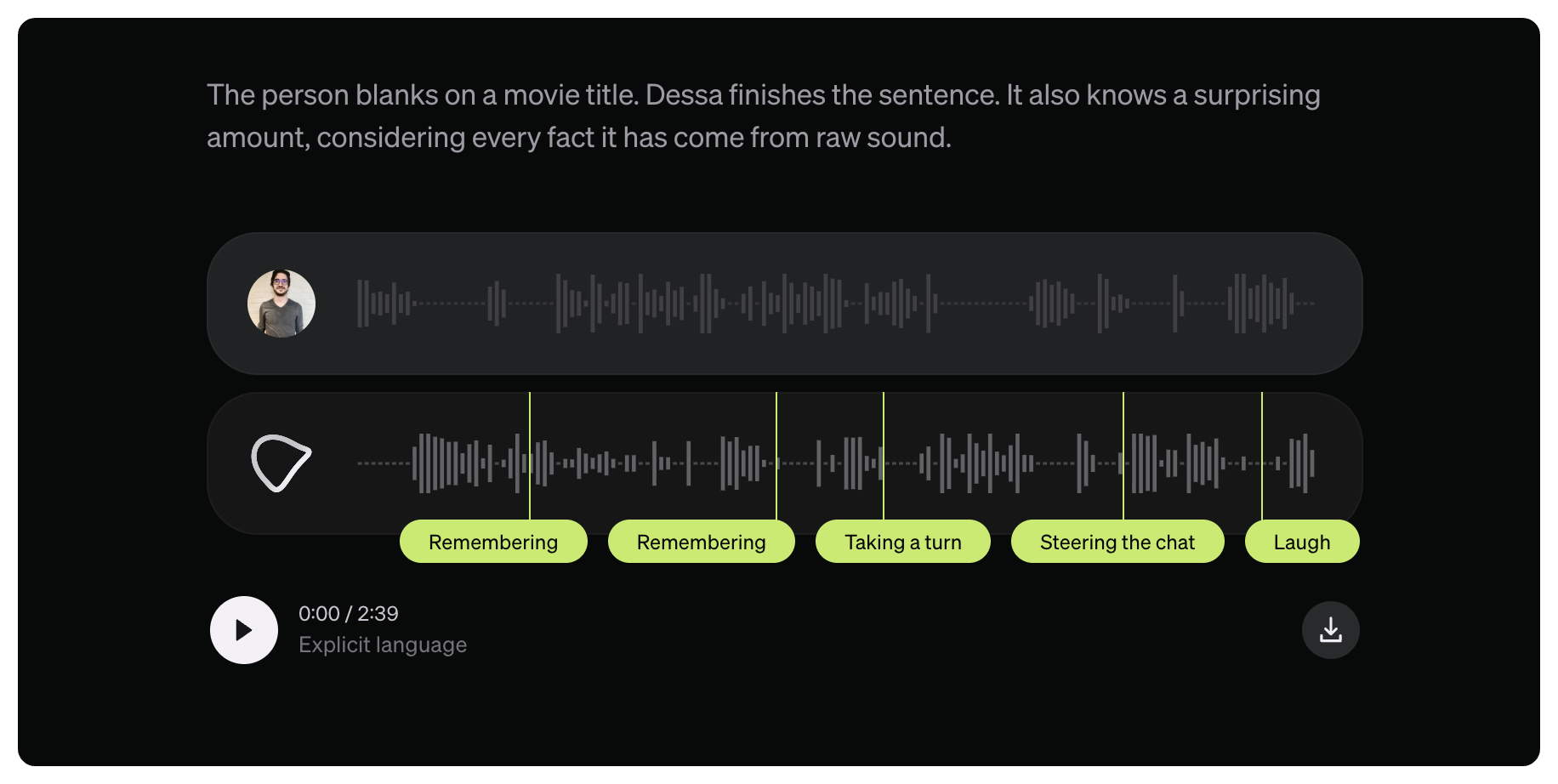
📋 The Details: It listens and talks at the same time, the way a person on the phone does. That lets it cut in or toss out a quick "yeah" while someone is still talking. In one of Block's recordings it laughs at a joke mid-sentence instead of waiting its turn. And it's light enough to run locally on a MacBook Pro with an M4 Max chip or better.
🎯 Why You Need to Know: Block calls today's tone-deaf voice AI a safety problem, picturing someone in serious pain while a bot carries on as if nothing's wrong. Put that same deafness on your support line and you get a bot that can't tell an angry customer from a happy one.
⚡ Your Move: Dessa itself is open only to a small group of AI safety researchers for now. Ask the vendor behind your voice bot whether its model hears audio directly or converts speech to text first. Play them Block's recordings while you ask.
OpenAI Doubles Usage Limits on Its Top ChatGPT Plans
OpenAI gave its biggest ChatGPT spenders twice the room to work on Thursday, effective immediately. Codex lead Thibault Sottiaux announced it on X, and he also backed off a planned cut to one plan after hearing from subscribers.
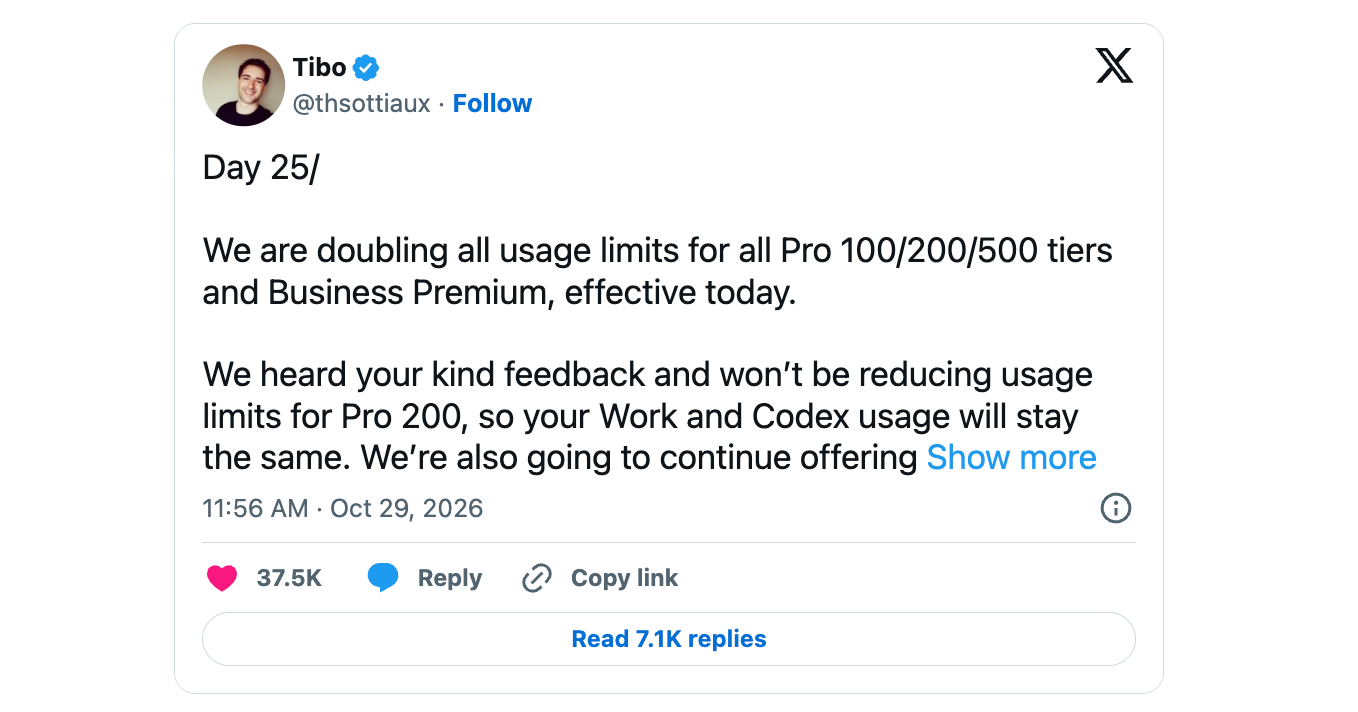
📋 The Details: The doubling covers every Pro tier, from Pro 100 up to Pro 500, along with Business Premium. Pro 200 also dodged the cut it was facing, so its Work and Codex limits won't shrink after all. As for dots, the always-on agents OpenAI introduced in September, they keep their extended limits "for now." Your dot's usage still sits apart from your regular allowance.
🎯 Why You Need to Know: Long Codex runs and ChatGPT Work jobs that had you watching the meter now get twice the headroom. Sottiaux also promised better models and efficiency gains that will stretch usage further over time.
🧵 The Thread: GPT-6.1 Terra gets more tasks out of each Work and Codex allowance than its predecessor, so a doubled Pro plan stretches further still.
Thanks for reading.
Until next time!
The AI Marketers
P.S. Help shape the future of this newsletter – take a short 2-minute survey so we can deliver even better AI marketing insights, prompts, and tools.
[Take Survey Here]
