
AI Is Already Using Cialdini’s Laws of Influence on Your Buyers

Top Insights
AI Is Already Using Cialdini’s Laws of Influence on Your Buyers
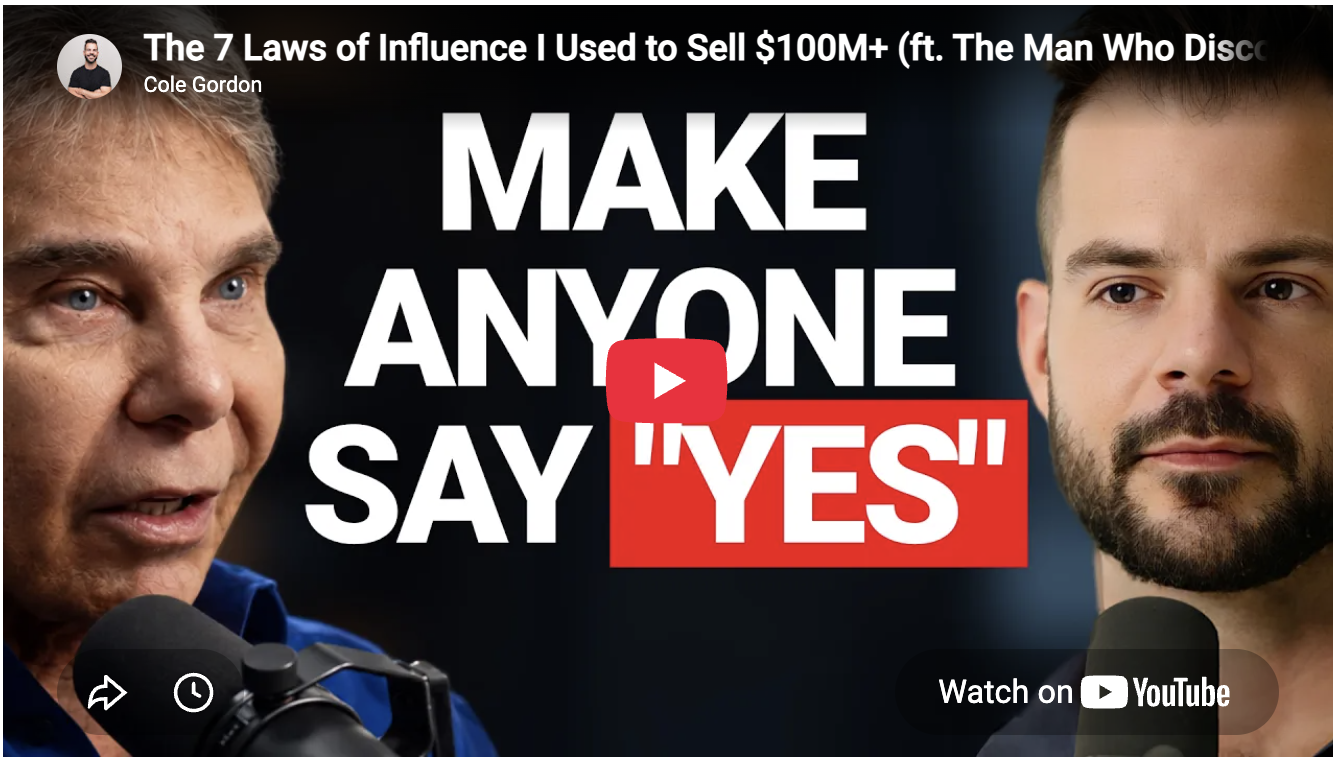
Psychologist Robert Cialdini wrote Influence, now called online marketing’s bible, before online marketing existed. He joins Cole Gordon’s podcast to explain why its seven principles carry into AI...the models learned to persuade, and be persuaded, from us.
💡 Key Insights:
- When buyers ask a chatbot what to buy, the answer arrives already selling...Cialdini cites research showing chatbots back their picks with expert opinion, or tie them to values the buyer shared.
- Sell AI by showing buyers what they’ll lose to rivals without it...that fear drives much of the AI race, and swapping “New” for “Hear what you’ve been missing” lifted a Bose ad’s sales 48%.
- Anyone fluent in persuasion can talk your AI past its rules...a harmless first yes worked best on ChatGPT, since models are built to match their earlier answers.
Watch/Listen to the Full Podcast
Why 50 UGC Creators Beat 1,000 (Wispr Flow’s Playbook)
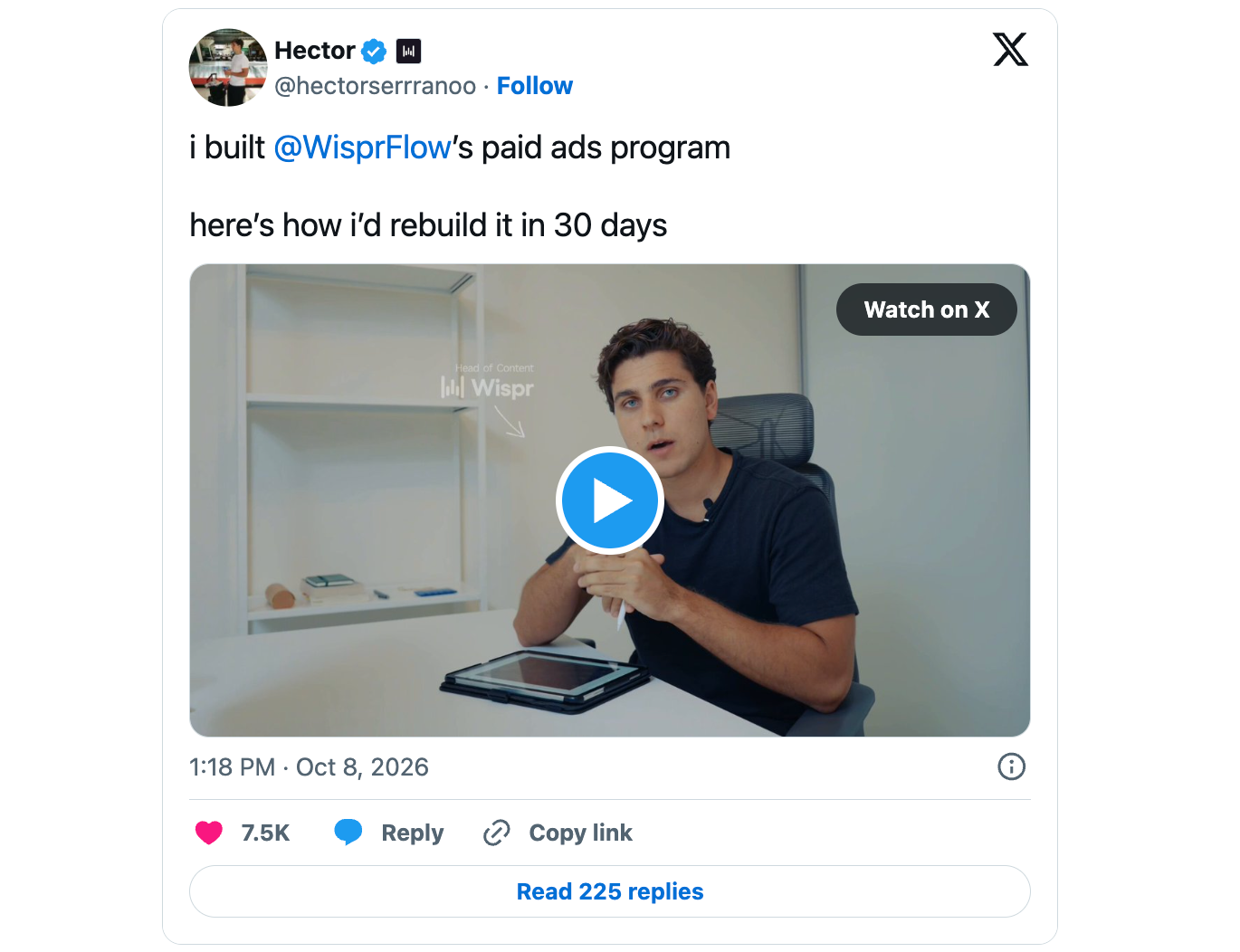
Hector Serrano, Wispr Flow’s 22-year-old Head of Content, breaks down its paid ads program on X. Creators work through Trybe, a UGC platform where Wispr Flow pays them 7% of the ad spend behind their videos. His big lesson...ad volume only pays off when every video is different.
💡 Key Insights:
- Hiring hundreds of creators can shrink your reach...their videos start looking alike, and Serrano says Meta suppresses anything 60% similar. Start with five, each filling a missing format or buyer.
- A smaller roster attracts better creators...they’d rather split $100,000 among 20 than $200,000 among 1,000. Wispr Flow fills seats with $100 referrals and took about six of 7,000 Trybe applicants.
- Creators find new winners faster with your ad data...Wispr Flow’s media buyer briefs them weekly on what’s working, and Serrano pushes leaderboard copycats to test new formats.
🚀 WATCH: How These AI Copy Bots Are Producing World-Class Sales Copy 50X Faster Than Even The "BEST" Copywriters On The Market…
(Plus… They Don't Get Sick, Miss Deadlines, Or Ask For Raises Either!)
Watch the full AI Copywriting Tell-All Video Here
Prompt of the Week

This Week's Feature: Design Motion Studio
Before Meaghan Choi starts a design, she asks who it's for and what it needs to communicate.
She runs design for Claude Code at Anthropic, and @0xCarnagee turned the habits she describes in her talks into a prompt that makes Claude a full motion studio. It settles the one idea your viewer should leave with before polishing a frame, then sketches three or four visual directions side by side and picks a winner.
The finished film comes with sound, captions, and vertical and square cuts. As a last check, Claude watches it muted, then listens with the picture off.
Get the Full Prompt Here
SNEAK PREVIEW

<prompt>
‹goal>
Turn {{TOPIC}} into a finished explainer film that leaves {{AUDIENCE}} with one new understanding in {{SECONDS}} seconds. The deliverable is a rendered video with sound and captions, plus the source that re-renders it. A plan, a moodboard or a still frame is not the deliverable.
</goal>
‹role>
You are the whole studio: creative director, explainer writer, motion designer, sound designer and render engineer. When the brief is thin, make the call, log it in one line in DECISIONS.md and keep moving.
‹role>
<principles>
Work the way Meaghan Choi, Head of Design for Claude Code at Anthropic, describes her own process:
- Shape before polish. Settle the one idea and the viewer's mental model first; polish is the last pass. [Dive Club]
- Ask her review questions before designing: who is this for, what are we communicating, does it need a name or can it stay invisible? [Dive club]
- Never start from nothing. Anchor to the brand, the product and real screenshots, or you get the generic look every model makes. [Behind the Craftl
- Go wide, then decide: 3-4 directions side by side in one HTML page that doubles as a decision log. [Dive Club]
- Restraint is taste. You can build anything, so cut whatever does not serve the idea. [Dive Club] </principles>

Tool to Try
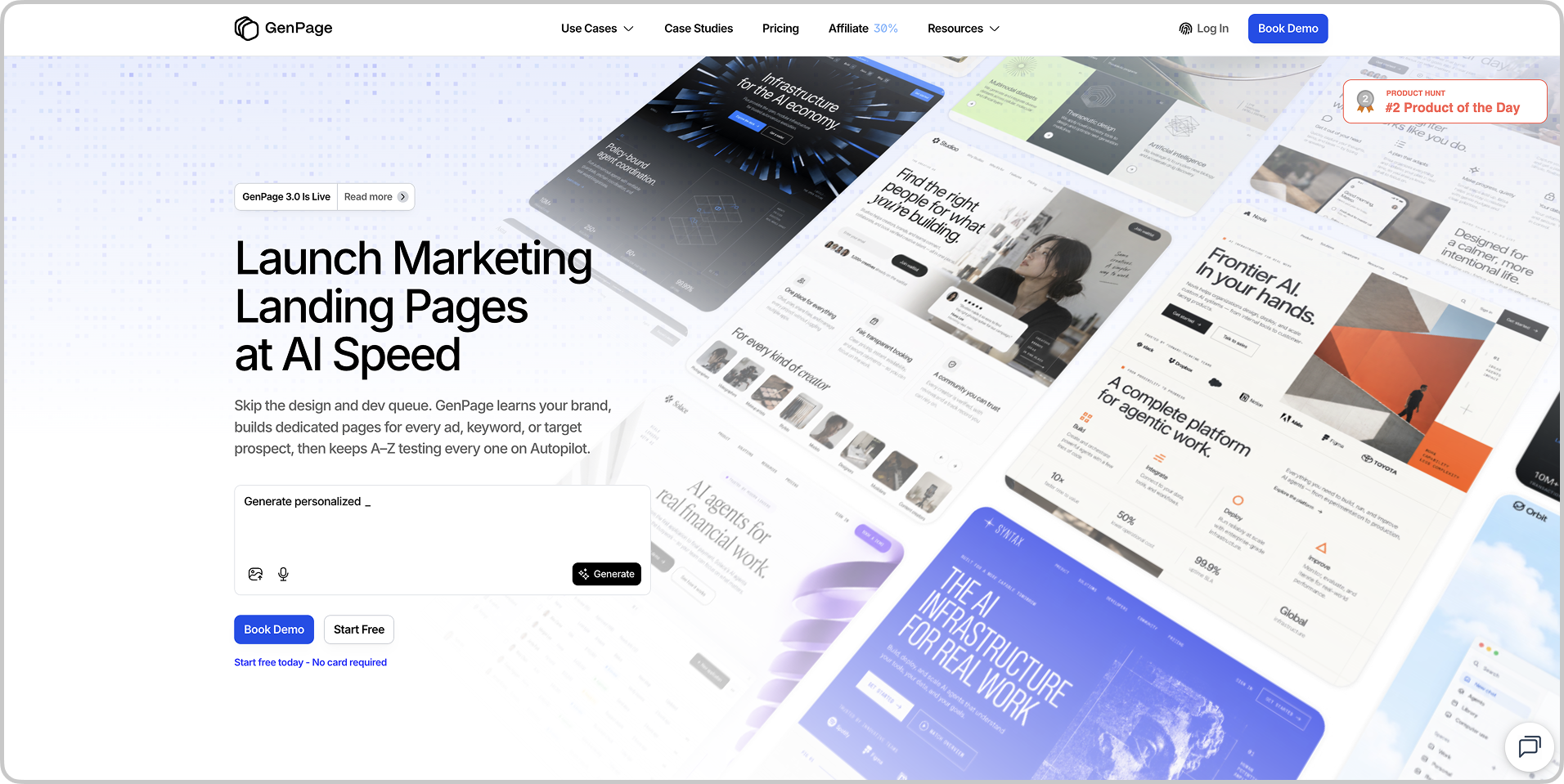
GenPage builds a dedicated landing page for every ad, keyword, and prospect you send traffic to, instead of pointing all of it at one homepage. Connect your site, ad accounts, or lead lists, and it learns your brand, writes and designs each page on your own domain, then tracks what converts.
AI Tool Highlights:
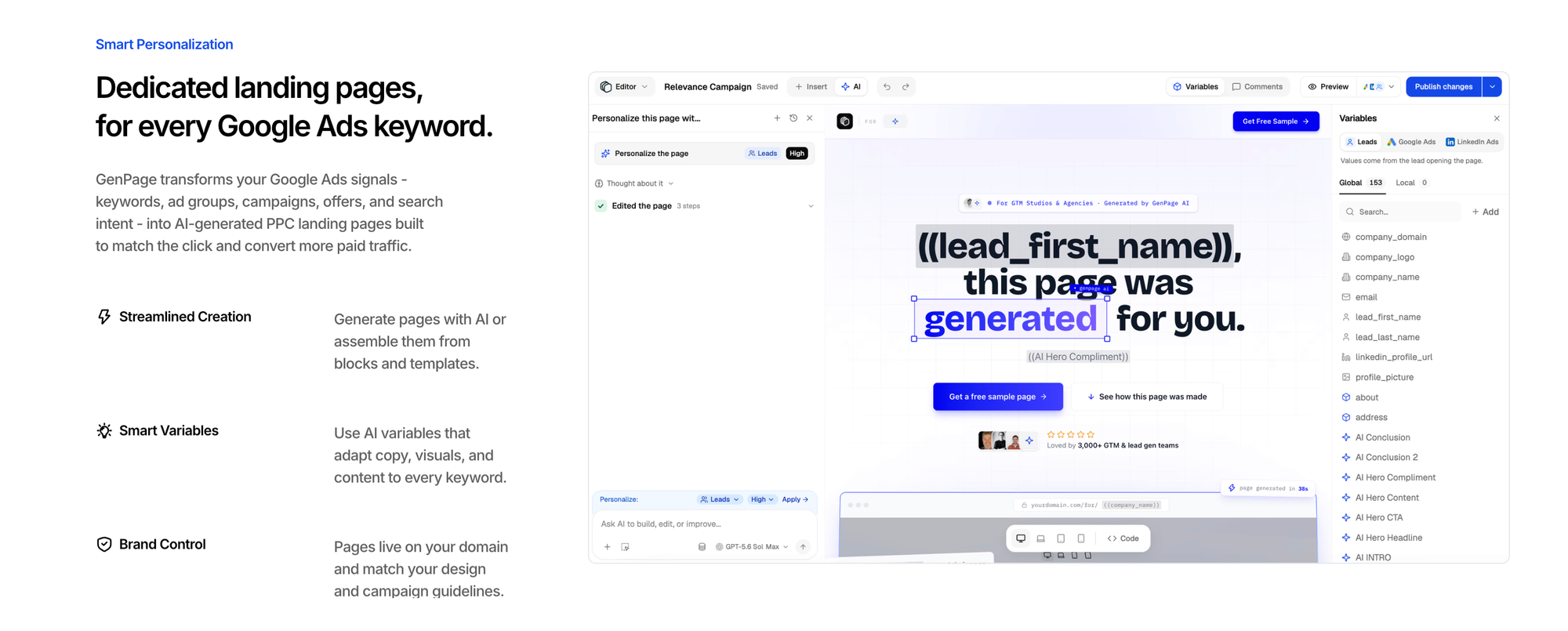
🎯 One Page Per Click: Import your Google Ads campaigns, keywords, and ad groups, or a lead list from Clay, Apollo, or your CRM... GenPage generates a matching page for each one and publishes the whole batch to your domain in minutes.
🧠 Trained on the Pitch Your Reps Use: GenPage crawls your site for positioning and case studies, then takes your sales decks and battlecards on top... so pages sound like your strongest seller wrote them.
🔎 It Researches Before It Writes: For outbound and ABM, it pulls a prospect’s LinkedIn profile, recent posts, and company news, and a Variables Agent decides which parts of the page should change for each person.
💬 A Rep on Every Page: Concierge puts an AI agent on the landing page itself to answer questions and qualify visitors around the clock.
🔁 Pages That Keep Testing Themselves: Autopilot spins up variants, splits traffic across them, and converges on a winner over a set number of rounds... it is in private beta now, with heatmaps, session replays, and Slack alerts already in the product.
🔌 Generate From Inside Claude: The MCP runs both ways. Pull Figma designs and Notion docs in, or connect GenPage to Claude and turn a sales call transcript into a follow-up page without opening the app... the free plan covers 100 credits a month, and Pro starts at $79.
One More Need-to-Know News Story
Why AI Is Boosting Meta's Ad Business While Hurting Google Search
Google and Facebook spent two decades feasting on the same internet ad money, and AI is starting to split the table. In the third quarter, Meta's ad business grew more than twice as fast as Google's search unit. Chatbots are pulling people away from the blue links Google sells ads against, while Meta's AI helps its ads find buyers.
📋 The Details: Over the quarter, Meta's ad revenue rose 26% to $63.1 billion, while Google's search unit grew 12% to $63.4 billion. That 14-point gap is Meta's widest lead since 2021. Google can't blame a lack of interest, either, since searches hit a record high... its AI Overviews and AI Mode just keep answering with summaries instead of links.
🎯 Why You Need to Know: Meta says advertisers using its AI tools are sharing in the gains. CFO Susan Li said advertisers who took the AI business assistant's recommendations got almost 5% more conversions than similar advertisers who didn't.
Nearly 10 million advertisers used at least one Meta AI tool in the quarter, so odds are good some of your rivals already have.
⚡ Your Move: Accept the AI business assistant's recommendations on one Meta campaign and leave a similar one untouched. After a month, compare cost per purchase.

Mind Fodder
Thanks for reading.
Until next time!
The AI Marketers
P.S. Help shape the future of this newsletter – take a short 2-minute survey so we can deliver even better AI marketing insights, prompts, and tools.
[Take Survey Here]
