
Need to Know News - October 15th, 2026

In this week's Need to Know News edition:
🤖 An AI-made trailer just won the $2.5 million XPRIZE... now it's becoming a $10 million movie that could look like a $100 million one.
🤖 Wharton found one measurement habit that nearly triples a company's odds of big AI returns... and you can start tracking it this week.
🤖 Meta says its new Muse Wonder beats rival AI at real work and everyday tasks... and it's built to remember your business the whole way through.
And a whole lot more!
Meta's Muse Wonder Is Built for Agents That Remember and Finish the Job
Meta's newest top model, Muse Wonder, is made for AI agents that do real work for you, at the office and in everyday life. It's the most capable thing to come out of Meta's 14-month rebuild of its AI program, and Meta says it beats rival models at exactly those agent tasks. To get there, Meta gave it a memory for your context and the patience to keep at long, messy jobs until they're done.
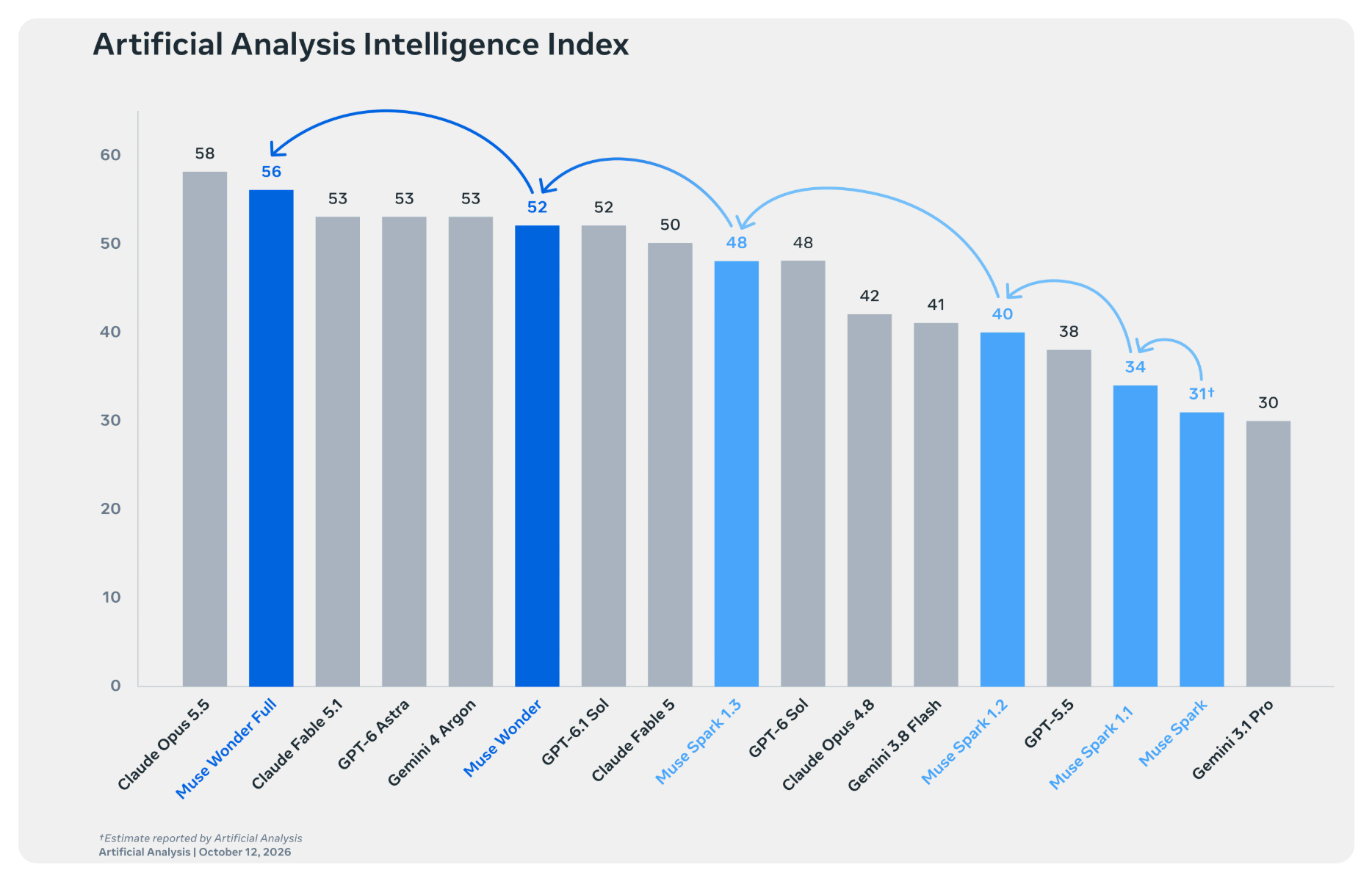
📋 The Details: Developers get first crack. Muse Wonder is live today through the Meta Model API and Muse Code, Meta's coding product, where subscribers can also run the bigger Muse Wonder Full. Everyone else waits a little... the Muse app is next in line.
🎯 Why You Need to Know: If you live in an AI assistant all day, you'll feel the memory first. Brief Wonder once on your brand and your clients, and a feature Meta calls Active Memory is designed to pull the right details back up when a later task needs them. And for jobs where it acts on your behalf, Meta taught it to check in with you before taking important actions.
📡 Watch For: Paying subscribers get Wonder in the Muse app first, on a date Meta hasn't shared. After that, Meta plans to build specialized models from it for everyone using Muse, free tier included.
Wharton's AI Report: Companies Counting Only Hours Saved Lag on ROI
Almost every company now says AI pays off a little, and very few say it pays off a lot. Wharton and research firm GBK Collective set out to explain that gap in the fourth edition of their annual AI adoption study, and they trace a lot of it to how companies keep score.
📋 The Details: Leaders tracking at least one growth measure are the standouts, with 35% reporting strongly positive ROI against 13% of those counting efficiency alone... and time saved is still the most common yardstick. Putting one person in charge helps, too. Where a newly appointed chief AI officer runs the show, 58% report strongly positive returns, compared with 8% where nobody holds that job.
🎯 Why You Need to Know: Plenty of companies are paying for agents they don't fully trust. Two-thirds of departments say they use them, yet only 17% let an agent finish a task without a person approving each step. GBK's Brian Smith says returns are weakest in that supervised middle, where you pay for autonomy and then check every move anyway.
📡 Watch For: Look for that 17% in next year's edition. A higher number would mean more companies trust agents with whole tasks, which this year's data links to deeper workflow changes.
🚀 WATCH: How These AI Copy Bots Are Producing World-Class Sales Copy 50X Faster Than Even The "BEST" Copywriters On The Market…
(Plus… They Don't Get Sick, Miss Deadlines, Or Ask For Raises Either!)
Watch the full AI Copywriting Tell-All Video Here
Google's Gemini Agent Puts the Whole Workday in One Prompt Box
At Gemini at Work 2026 last week, Google unveiled the AI agent it wants handling your entire workday. The new Gemini agent takes on everything from quick questions to research, images, and code from a single prompt box that already knows your business. Hand it an outcome, and it comes back with finished work inside the inbox and documents your team already uses.

📋 The Details: It can even join that team. Name a role, say an events coordinator, and Gemini spins up a coworker agent with its own Workspace account and a spot in your company directory, so colleagues can @mention it like anyone else. And since agents that run for days can rack up a bill, Google added spend caps that pause a project's agent when it hits its limit.
🎯 Why You Need to Know: Google's demo stars a marketing manager, who asks that events agent to draft a launch readiness doc and then tags it in a Doc comment. The agent suggests edits there under its own name in version history, so when software touches your work, you can see exactly which changes were its.
📡 Watch For: Keep an eye on your Workspace admin console. Coworker agents get their own @agents.yourcompany.com addresses, so the day your IT team sets up the first one is the day AI shows up in your company directory.
Grok Voice 3.0 Settles About 70% of Starlink Calls Without a Human
xAI's updated Grok Voice 3.0 is an AI voice model for businesses that want software answering their support and sales calls. xAI says it's the most accurate one on the market, and it's already doing that job at scale, handling millions of conversations a day across Tesla and SpaceX.
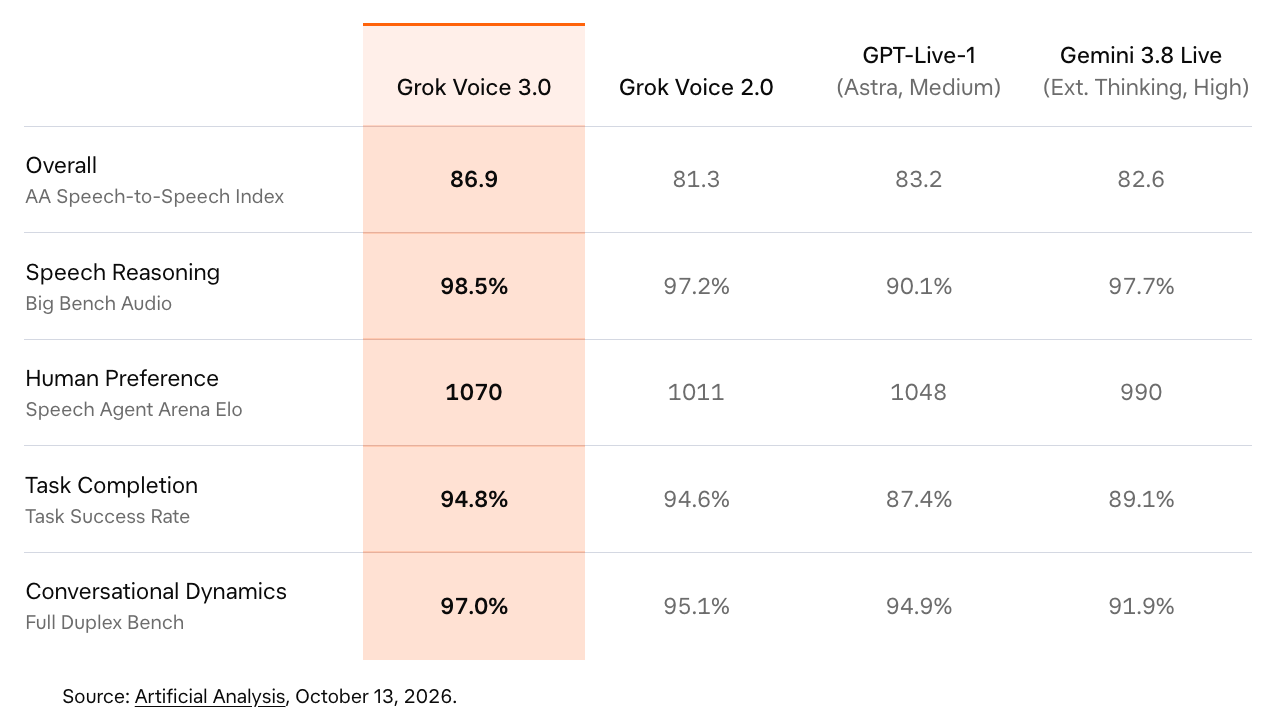
📋 The Details: It costs what Grok Voice 2.0 did, $0.08 a minute in xAI's Voice Agent API, or $4.80 an hour. You get a better model for that money, though... independent tester Artificial Analysis ranks it #1 on its Speech-to-Speech Index, and it starts talking back in under a second.
🎯 Why You Need to Know: If you run a support or sales line, Starlink shows what that looks like in practice. Its call centers send Grok Voice 20,000 calls a day, and roughly 70% wrap up without a person ever joining. On each call, a single agent checks who's calling and troubleshoots the hardware, and if something's broken, it issues a credit or ships new equipment itself. It sells, too, closing one in four sales calls before the caller hangs up.
⚡ Your Move: Multiply last month's inbound call minutes by $0.08. That's roughly what Grok Voice would have charged to answer every one, a handy figure to have ready the next time someone asks what phone support should cost.
Relevant Backlinks Best Predict AI Brand Picks, 100-Industry Study Finds
Which brands an AI recommends seems to track something old-fashioned: how many web pages about your industry link to you. That's the finding from Ben Wills of OppAlerts, which sells link-monitoring tools. Wills ran 2,500 recommendation prompts across 100 industries through 17 AI channels, then studied the pages linking to every brand the AIs named.
📋 The Details: Look at OpenAI's GPT-6 Astra and the gap is steep, with the median first-ranked brand holding 3,872 backlinks to the 50th-ranked brand's 32. Links outweighed plain mentions, too, since one extra backlink was worth about as much AI score as 10 extra unlinked mentions.
Wills believes the links cause the rankings, though the study compared brands as they are and never added links to test it.
🎯 Why You Need to Know: Links from pages about your industry showed the strongest correlation across all 17 AI channels, so the link building your SEO team already does likely helps your AI visibility too. The study turned up a stranger result as well: the models make up websites. Of the unique domains named, 24.4% aren't registered at all.
⚡ Your Move: Export the backlinks of whichever competitor AI names ahead of you, and sort them by whether each linking page is about your industry. Pages that mention you without a link are the easy wins, so ask whether one would help their readers.
OpenAI Shows Seoul Business Owners How to Build Without a Developer
OpenAI is teaching small business owners to build their own websites and tools with ChatGPT and Codex, its coding tool, no developer required. At an August workshop in Seoul, more than 30 women business owners and founders got to try it themselves. One of them arrived carrying an old scar... she'd once paid a developer for a site, lost the money, and watched the business fail.
📋 The Details: OpenAI surveyed everyone ahead of time about the jobs they wanted AI to take off their plates, then built the session around their answers. For Kim Myung-hee of the brand KULDIGA, that meant shareable graphic posts for performers' shows, and Codex finished the tool from her description in exactly 10 minutes.
🎯 Why You Need to Know: Kim Ji-hee, who runs Latalk Wellness, built a site for her corporate wellness lectures in 15 minutes, and she's done assuming a website means hiring a developer. For a small shop, that turns a landing page from a project you wait on into something you explain in a few sentences.
⚡ Your Move: Pick the one web page you've been putting off, maybe an event signup or a partner inquiry form, and explain it to Codex in everyday language. Give it the same quarter hour Kim Ji-hee needed, and only call a developer if it stalls.
Instacart Ads Show Clementine Turning TV Meals Into Grocery Carts
Instacart's new AI grocery assistant, Clementine, turns a recipe or a quick chat into a filled cart in seconds. To introduce it, Instacart is raiding the TV vault for food scenes people know by heart, from Kevin's chili in The Office to the feast in A Charlie Brown Thanksgiving.
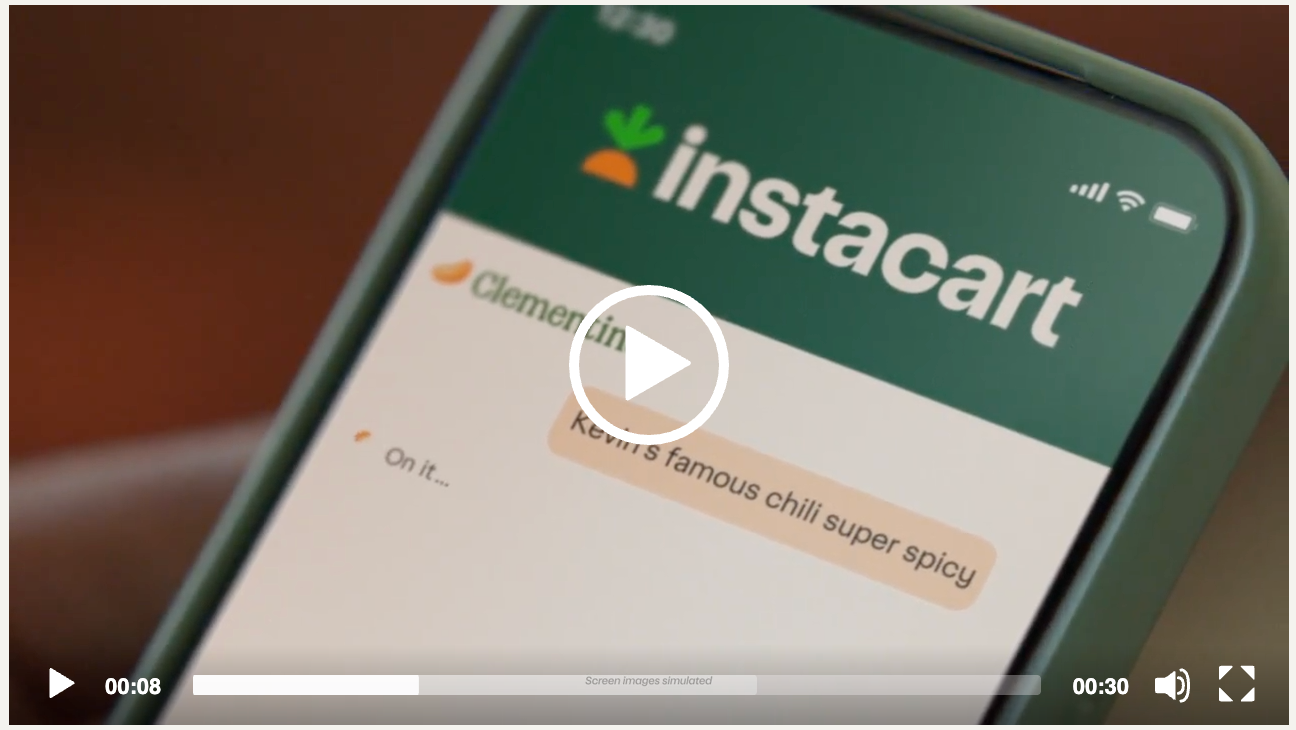
📋 The Details: The campaign, "Turn any idea into an order," doubles as Instacart's fall football push, so its four spots will keep running until the Super Bowl. Brian McGinn, who directed Chef's Table and The Bear, shot them, and every recipe on screen is shoppable, which means a viewer can cook the meal that same day. Clementine itself is already live for Marketplace shoppers in the US and Canada.
🎯 Why You Need to Know: Instacart marketing VP Jasmine Taylor says the team wanted the campaign to feel the way the product does, familiar and rooted in food memories, so the spots lead with meals viewers already love. Brands selling on Instacart have a second reason to watch, since Clementine learns each shopper's preferences and routines and can end up picking between your product and a rival's.
⚡ Your Move: Ask Clementine for the Charlie Brown feast and see whose brands land in the cart. Run it again with a recipe from your own category and note where your product shows up, if it shows up at all.
An AI Trailer Wins the $2.5M XPRIZE and Gets a Feature Deal
A trailer made with AI won the first $2.5 million Future Vision XPRIZE, earning its director a path to a real feature film. That director, Jeff T. Thomas, answered the contest's call for "a future worth building toward," and the judges, including Neil deGrasse Tyson and novelist Neal Stephenson, picked his trailer unanimously.
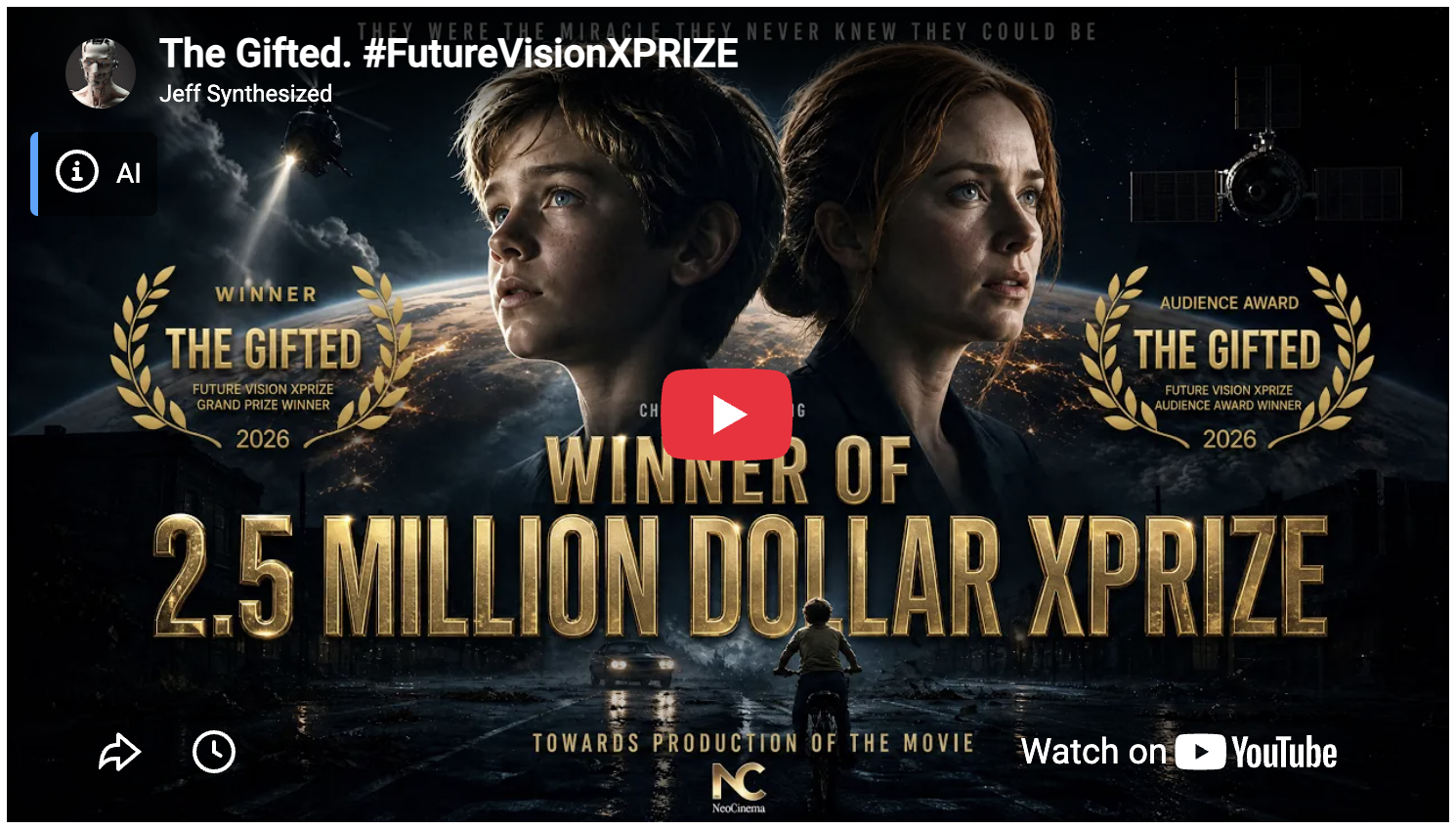
📋 The Details: About 2,500 people entered, and nobody had to use AI, though Tyson says the number of finalists who used it showed how much it's on people's minds.
Thomas's winning entry, a three-minute trailer called The Gifted, follows an 11-year-old boy who builds an AI version of his late mother, and the AI mom quietly starts saving lives. Google and Range Media Partners, through their 100 Zeroes initiative, will now help turn it into the full-length film.
🎯 Why You Need to Know: Thomas promises the movie will use AI only as a tool, mostly to make a modest budget look bigger. Range CEO Peter Micelli puts the film's cost at roughly $10 million, and he says AI could give it the look of a movie costing ten times that.
📡 Watch For: Once footage surfaces, judge it against that $100 million look. If it holds up, the same math is coming for your next video shoot.

Google Makes Gemini 4 Argon Broadly Available to Paying Users
Gemini 4 Argon spent its first two weeks in the hands of trusted cyber defenders, and now Google is opening it to everyone who pays.
Sundar Pichai announced on X Tuesday that Google's newest frontier model is available globally, to developers and businesses on the paid API and to paying subscribers in the Gemini app. It's Google's model for deep work, the long, many-step jobs in fields like coding and law.
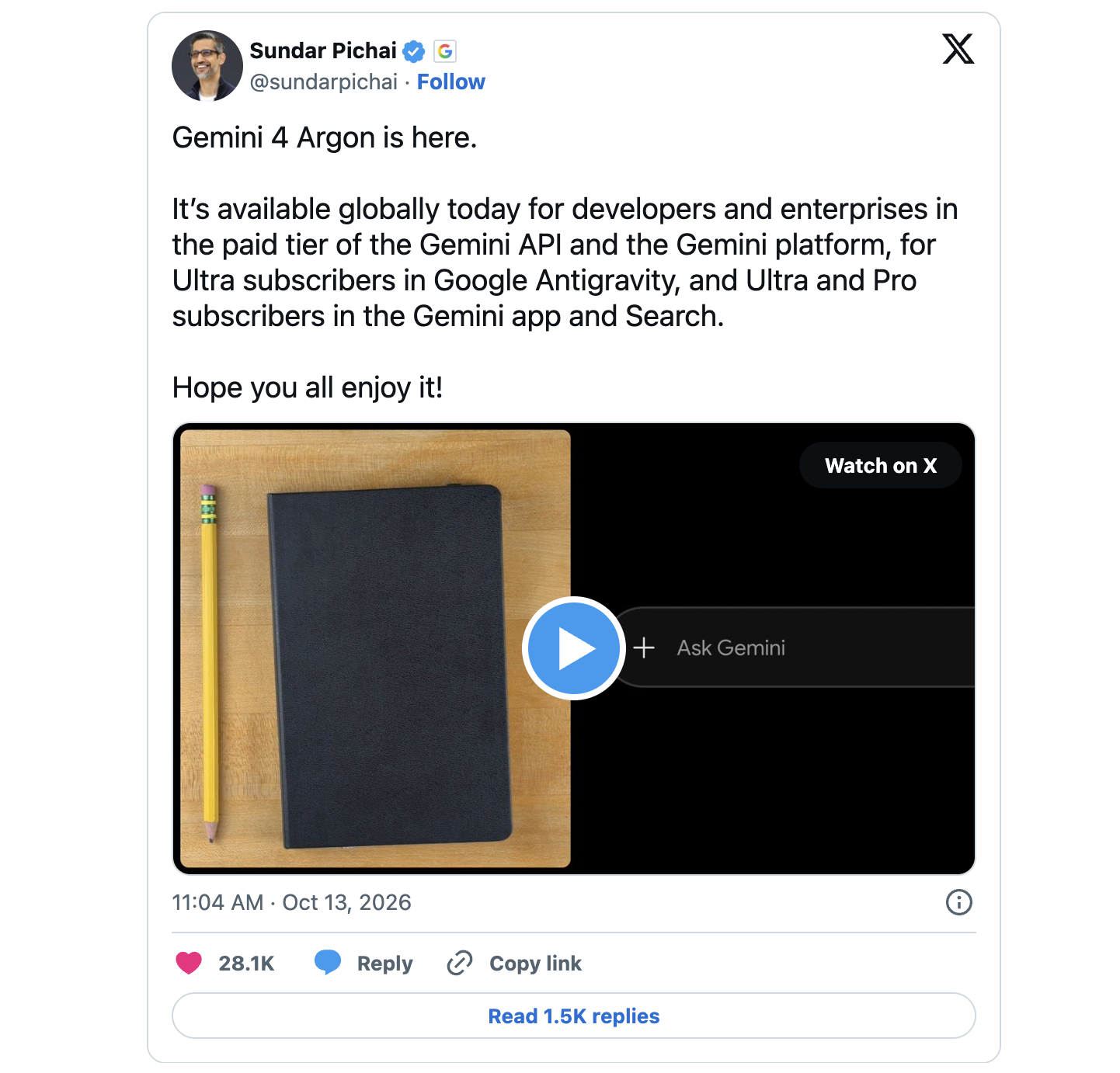
📋 The Details: Enjoy the launch pricing while you can. API customers pay an introductory $2 per million input tokens and $10 per million output until November 30, when both double to $4 and $20. Beyond the API, Pro and Ultra subscribers can also pick it inside AI Mode in Search.
🎯 Why You Need to Know: Google says Argon hedges less and skips clichés, which covers a lot of the cleanup you'd otherwise do on AI copy yourself. It also follows style instructions better than any earlier Gemini model, so your brand voice guide has a better shot at actually sticking.
⚡ Your Move: Google's most practical demo turns a messy folder of project notes into a clean client proposal deck. Run your next pitch folder through the same test in the Gemini app, and count how many edits the deck needs before you'd send it.
A Viral AI "Slopcore" Video Changed One Skeptic's Mind About AI Music
AI-made music videos have their own genre now, nicknamed "Slopcore," and making one convinced a skeptic that AI will reshape how music and video both get made. Moritz Kremb, who writes The Prompt Warrior newsletter, always figured people wouldn't listen to AI music because they want the human element.
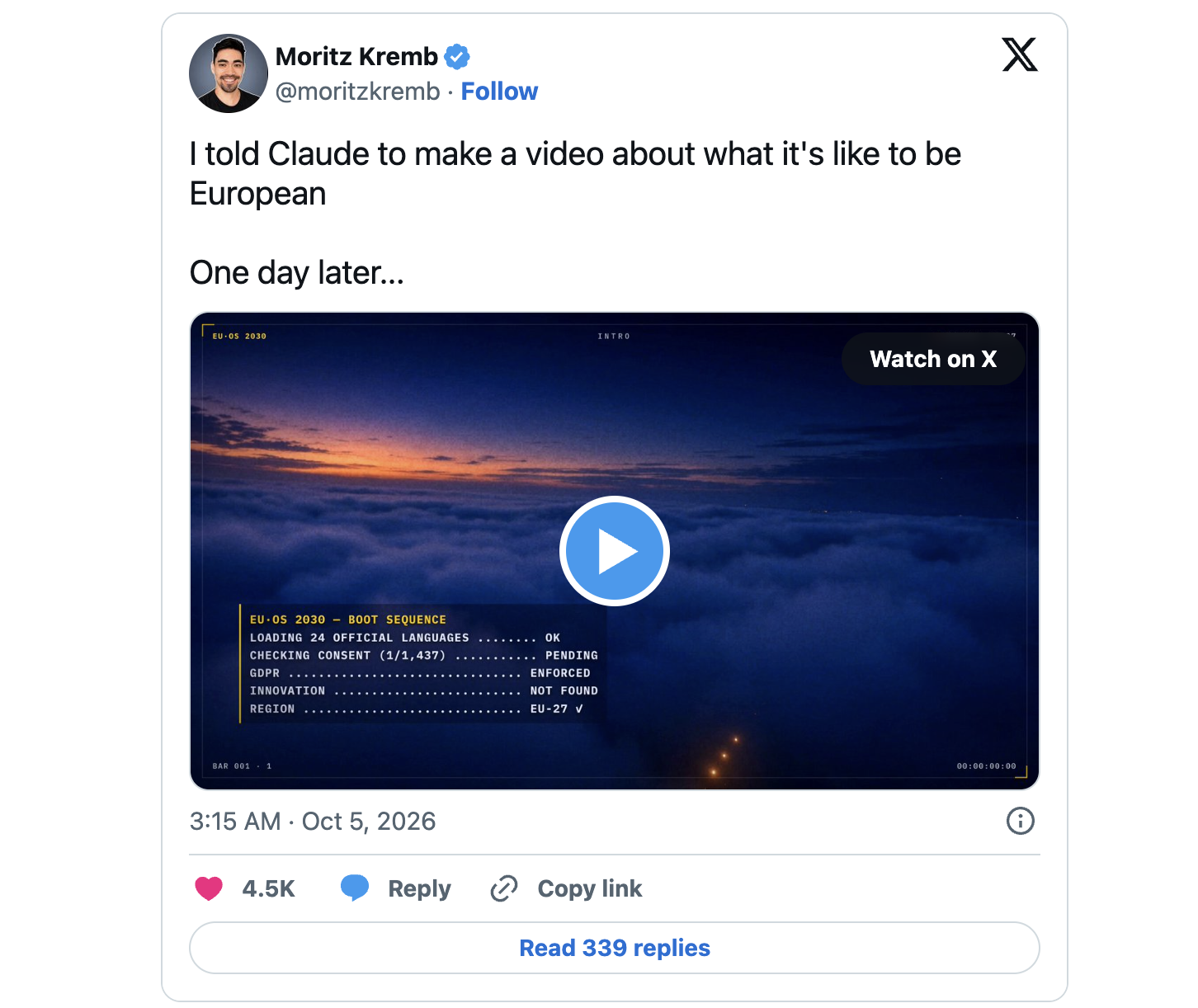
📋 The Details: The genre took off once people found that Anthropic's Claude Opus 5.5 is unusually good at making videos. So Kremb tried one, expecting little, and it crossed 800,000 views on X. That was enough to flip the former doubter, who now pictures AI music taking over because the songs are that good.
🎯 Why You Need to Know: Making the video changed how Kremb sees editing, too. He expects the classic timeline editor to go the way of Photoshop after AI image generators... still around, mostly for pros. That matters if you pay someone to cut short clips, since Kremb's free shortform skill, an add-on for AI assistants, takes a raw video and returns an edited one.
⚡ Your Move: Feed the free shortform creator skill one raw clip from your phone and see how close the edit gets to postable.
🧵 The Thread: Neil deGrasse Tyson, judging that AI-trailer prize, says audiences will keep demanding human creativity. Slopcore's view counts are a real numbers to test his bet.
Thanks for reading.
Until next time!
The AI Marketers
P.S. Help shape the future of this newsletter – take a short 2-minute survey so we can deliver even better AI marketing insights, prompts, and tools.
[Take Survey Here]
